

Blog 50. 1925 Crowborough Sussex The poultry farm murder

Elsie Emily Cameron thought she had found the love of her life but their relationship had fatal consequences for her in the end.
John Norman Holmes Thorpe, known as Norman, was born on 22 June 1900 at Sultan Road in North End, Portsmouth. He was the only son of John Charles Adolphus Thorne, who was 24, and Katie Ada Holmes, who was 23. Both parents were from Portsea Island. His father worked as a steam-engine fitter at the dockyard.
When Norman was six, his mother died at their home at 81 Sultan Road, North End, Portsmouth. She was 28 and passed away from tuberculosis and exhaustion. Witnessing this loss was a difficult experience for any child.
Following his mother's death in 1908, his father married Lilian Rachel Hayter, age 29, from Portsea Island, the daughter of a grocer.
While living in Portsmouth with his father, Norman became involved with the Wesleyan church on Arundel Street. At 15, he served as a Sunday school teacher and Band of Hope leader. He was known for his good singing voice and often performed at school concerts, showing his active role in the community.
Norman’s father later found work in London as a mechanical engineer for the Admiralty Engineer Overseer. This new job led the family to move to 115 Holland Road in Harlesden, Brent, in northwest London.
After moving to Kensal Rise, now known as Kensal Green, the family joined the local Wesleyan church and became active in the local community.
Norman went to Chamberlayne Road Council School, but he was not seen as an outstanding student.
Through the church community, the family met the Cameron family, who lived nearby, and the two families became friends.
Donald Gilchrist Cameron worked as a travelling drapery agent in Campbeltown, Argyllshire, Scotland. During his travels, he met Emily Free from Loughton, Essex. They married on 4 June 1896 at Emily's local church, and she moved to Scotland afterward. Their first child, Elsie Emily, was born on 22 April 1898. Two years later, they welcomed twins: Margaret Elizabeth on 4 January and Donald John on 5 January 1900.
By 1911, the family had moved south for good and settled at 86 Clifford Gardens in Kensal Rise, Willesden, Middlesex, where they became part of the local Wesleyan church community.
Elsie Emily Cameron and Norman first met around 1916, when Norman was still a student at the Wesleyan Sunday school. At that time, his father served as the superintendent, and Elsie helped with teaching duties there.
After completing his education, Norman began an apprenticeship in the motor trade and subsequently worked at a motor engineering firm.
At 17, Norman became a scoutmaster, leading a troop of 160 Scouts. As the war continued in 1918, he was eager to serve and attempted to join the RAF on 30 April, but was held back due to his age. After his 18th birthday, and being a skilled mechanic, Norman was sent to France from 27 October 1918 to 21 October 1919, receiving the Victory Medal for his service.
By 1921, Elsie was 23 and worked as a shorthand typist, while Norman, then 21, had worked as a motor and electrical engineer at Fiat Motors in Wembley, but was unemployed at this point.
Amid these changes, Norman desired to make a way for himself so that he might settle down and marry Miss Cameron, who was now his fiancée, and those who had spoken to Elsie claimed that it was regarded by her as the happiest moment in her life.

Her friends knew what romance meant to her: getting married and having children. She was immensely fond of children and enjoyed working with them through the church's Sunday school.
On 13 September 1921, the Cameron's celebrated when 21-year-old Donald married 18-year-old Leslie Vera Suckling, who was from Kensal Rise. Leslie was three months pregnant with their first child at the time. Around this period, Elsie was likely excited, knowing she would one day marry Norman.
The happy news continued in January 1922, when 22-year-old Margaret Cameron married 28-year-old William Blumfield, a solicitor's clerk from Islington, London and also her Cousin, Son of her mothers sister Mary Ann Free.
Amid the ongoing celebrations, Donald's wife, Leslie, gave birth to their daughter, Jean, on 19 March 1922.
Later in 1922, with financial help from his father, Norman bought a farm at Blackness, an area in Crowborough, Sussex, which he named Wesley Farm after the preacher John Wesley. Throughout this period, he frequently discussed his plans to succeed on the farm, build a bungalow, and settle down with Elsie. Despite his ongoing efforts, Norman had little success as a poultry farmer. During these months, Elsie stayed in Kensal Rise but visited the farm every few weeks, sometimes for a day or a weekend, staying in lodgings.
Skilled at needlework, she enjoyed spending time with Norman, making things and looking forward to their future together. While Norman continued to attend the local Wesleyan church in Croft Lane and taught Sunday school, Elsie assisted whenever she visited.
In 1923, the family continued to celebrate with the births of Margaret's son, Dennis William, on 27 January, and Donald and Leslie's daughter, Margaret, on 6 July, both in Hammersmith, London.
With both of Elsie's younger siblings married and starting families, Elsie was likely looking forward to her own wedding and having children.
In December 1924, events suddenly changed when Elsie's father reported her missing to the police. The last time anyone saw her was on Friday, 5 December 1924, as she was heading to Crowborough. When she did not return home on Sunday and missed work on Monday, her mother wrote to Norman, who replied that Elsie never arrived at his hut on the night she disappeared and stated he did not know where she was.
In January 1925, Crowborough was alive with excitement over the mystery of the disappearance of Elsie Cameron, who had left home, 6 weeks prior and wasn't seen or heard from since.
Although Norman had claimed Elsie never arrived, several witnesses say they saw a lady whom they believe to be Elsie, one within 10 yards of the gate at Poultry Farm, Blackness, on the evening of the 5th.
Inspector Edwards and his small, but faithful band of police officers, commenced enquiries. Every possible clue was followed up, and after having convinced himself that Elsie Cameron had actually arrived in Crowborough, the Inspector and his men. in addition to their ordinary duties, spent several hours each day in searching every possible nook and corner to where the missing girl might have strayed or been taken. Ponds and streams were dragged, and woods, fields and hedgerows thoroughly searched. extensive searches of thousands acres of land surrounding Normans farm, but all was in vain.
Every known rumour was investigated and the search continued. Norman had stated they often cycled together in Ashdown Forest. He suggested that if Elsie had come to Crowborough, she might have wandered into the forest in a confused state and gotten lost, so it was found necessary to scour every inch of the county, including Ashdown Forest, with its 35.000 acres undergrowth and the police hired the services of the local Terriers and of the Scouts, both bodies having volunteered their assistance should the police require.
The assistance of Scotland Yard was eventually called for following a conference of Chief Police officers the Sussex constabulary held at Lewes . Lieut.-colonel Chief constable of East Sussex, presided. Col. Ormerod arrived in Crowborough to investigate the case and began conferring with the local police.
Cecil Copplestone, a Red Cab driver, stated that he well remembered taking a lady from Tunbridge Wells train station to Crowborough that night, and that the lady stated she was bound for Blackness. He let her out at Crowborough Cross about 5 p.m. and, this time would tally with the time that she is said to have been seen in the lane leading to the farm.
Twenty minutes later, four witnesses, two men and two women who knew her by sight, stated that they saw her a few yards from her fiancé’s farm at Blackness. (It is just about a twenty-minute walk from Crowborough Cross to the farm)
It was now almost definitely established that the missing lady did reach Crowborough, but according to Norman, she did not reach his farm, and nothing has been seen or heard of her since.
The morning Elsie left, she had breakfast with her father, and he said she was in good health. At about 2 pm, she left a note saying she intended to catch the 3.45 pm train from Victoria to Crowborough, to visit Norman with a view to making the final arrangements for her wedding. The note stated she did not wish to take an earlier train as she desired to arrive under cover of darkness, so as not to be recognised. She left home carrying a small suitcase, and it appears that at Victoria, instead of getting into the back portion of the train, which went through to Crowborough, she got into the front portion, which took her to Tunbridge Wells Central.
She carried little money and jewellery on the day in question. She is well known in Crowborough and has visited Norman on many occasions, staying overnight with friends, and attended dances and other social functions with him.
She was described as a quiet, sociable girl and had made many friends in Crowborough.
Norman was described as a clean-shaven, dark-haired, well-built man who arrived in Crowborough and started his poultry farm. Living in a quaint wooden bungalow on the farm, and apart from his poultry, his only friends were his pet cat and dog.
Norman stated that he had not seen her since her last visit before her disappearance. He does not believe she ever arrived in Crowborough and states that she was not expected until Saturday evening.
He said that the day before she was last seen at home, he had sent a telegram telling her not to come, as her lodgings weren't available. He, however, received a note from her stating that she would arrive at Groombridge Station on Saturday evening. He went to the Station, but she did not appear, and he had heard nothing of her since. He said Elsie was seldom in good health and suffered from nervous debility and delusions. She may have had a lapse in memory. He also claimed that Elsie was a strange girl at times, and many incidents led him to seriously question whether he was doing the right thing by marrying her. On one occasion, she was so strange in her manner that he took her back to London, and in the railway carriage, she actually hinted at suicide and threatened to throw herself out of the window. He stated he had never told her that he intended to break off the engagement, although that was his intention. There was no other girl in his life, but he believed there was a plot to incriminate that hint, and the details of the plot were known only to himself.
Elsie’s parents and the police were told by Scotland Yard not to share information with anyone else. Norman said he had three or four lady friends who often visited his bungalow, but insisted that Elsie knew about them. He did not think she would come down unexpectedly to check on him. Norman said he was willing to do everything he could to help the police find Miss Cameron, but he had no idea where she might be.
To the public, Norman appeared deeply concerned about Elsie’s disappearance. He made a dramatic appeal through the press, asking her to let him know where she was and if she was alive. He published a letter in a London newspaper, with help from a journalist. The journalist suggested that a personal appeal from Norman might encourage Elsie to return, and could also help the letter reach a wide audience. The letter is shown below:
Wensley Poultry Farm, near Crowborough.
My dear Elsie, if you are alive, no matter where you are or what has happened, please write just one line to remove this dreadful suspense.
I cannot believe that you have created this situation of your own free will.
Whatever unfortunate circumstances have conspired to bring about this unhappy state of affairs, do not be afraid to tell me. I want to know all and to forgive all.
If it is your wish that you would prefer these things to be your own secret, and content, and a brief message from you will suffice.
You must realise, dear, the almost intolerable agony your silence is causing not only your parents, but to me. It was my love for you which sent me to seek a home and fortune in Crowborough, and it was my love for you which supported and sustained the wilderness of my isolated existence in the country. How many young men, healthy and strong, would have undertaken what I have done for you? From crowded, happy London, I came to this lonely spot to lead a lonely life. You, Elsie, are aware of how I have come through it with a smile for your sake. You know better than anybody how, at times, the loneliness has nearly driven me mad. In a little wooden hut at the end of the narrow lane, with only the fowls, dogs and cats for companionship. I have been a Robinson Crusoe in England. Cheerfully, I have gone on with this poultry farm enterprise, always working and striving to get money for a place worthy of you, and now this has happened. But I refuse to believe that you know of my position here. If you did, you would not wait to write; you would send a telegram.
You know what Crowborough is, and you know that my little wooden hut stands by itself in a field. Here I am alone. But everybody is thinking of me.
Worst of all, my dear, I know what they are thinking. They come down the lane and peer at the hut through the gate, as if some remarkable outcast occupied it. There is a look of morbid curiosity in their faces, and I am sure their evil minds are imagining the most terrible things. Scotland Yard men are here. I want to see them and give them every assistance I can. But Elsie, you are the one who can help most. Won’t you?
Please. Yours, Norman.
Norman also declared he was fully aware of the many rumours circulating in Crowborough, but said they were all a pack of lies. ‘’They point to my farm and say that's where the murder was committed, and then they say I boiled the body and mixed it with the pig food''. Some declared they had heard a gunshot. I have no pigs, no gun, or a boiler, what can you make of it?”
Elsie's mother, Emily Cameron, stated that her daughter had last visited Norman on the Sunday before her disappearance. The visit was only for the day. and was a special one because of a letter Elsie had received from Norman. She was greatly distressed when she received the letter, but declared that everything was all right when she returned, and Norman was going to marry her.
Mrs Cameron adds that she is quite certain there was no other man in the case, as far as her daughter is concerned. She was convinced that Elsie went to Crowborough on the 5th December, but what happened since has cast a shadow over the family, which dearly loved her. Elsie was not a girl who would cause a moment’s distress or anxiety if she could possibly avoid it. On the morning of 5 December, a letter arrived from Norman, addressed to Elsie, stating that the accommodation she usually had when visiting him was unavailable.
Her father, Donald Cameron, was assisting the police in solving the mystery and stated that he could not believe that Elsie had committed suicide. He suggested she had always been a bright, happy girl, although, recently, upon receiving letters from Norman, she had been depressed. some letters seemed to suggest that her fiancé who had some a few days after Elsie went away, as she had not returned home, had some idea of breaking off the engagement. He had only heard from Norman once since his daughter’s disappearance, and that was a letter in response to a telegram sent to Norman a few days after Elsie went away, as she had not returned home as planned.
There was a lot of conflicting evidence, some of which has proven worthless. An anonymous postcard was sent to Norman stating that Elsie had been admitted to Fulham Hospital on December 13th, but this proved incorrect.
A new development in the mystery occurred on Saturday, 10 January, when Elsie's mother received an anonymous communication written on a plain, unstamped postcard. The message read:—
''Elsie will return after the wedding. It is all off at Crowborough''.
This postcard bore the Notting Hill postmark and was dated Friday. In place of the sender's address was the letter X. The mysterious message was written quite legibly, but the signature was little more than an undecipherable scrawl, and this was the subject of inquiries, though it was believed to be bogus.
Her parents fear for her safety and didn’t believe Elsie would leave them with such anxiety, and would have been in touch.
A piece of fox fur found in Crowborough shortly after the date of Elsie’s disappearance gave rise to widespread rumours, but they proved groundless.
Great excitement was caused in the village by the rumour that a woman’s body had been found in a pond in the Warren. The pond was dragged, and the body was found. Another report spread the claim that the missing girl had been found. The rumour related to a girl who had been found asleep under some bushes in a quiet lane. The girl was not unlike Elsie but gave her name as Olive Wyatt from Tunbridge Wells, and stated that she was taken ill on Tuesday night and lay down in the bushes all night. She was removed to the hospital.
The suggestion that bloodhounds were used to aid the search for Miss Cameron was not true, and an expert stated that the continual rains would make it almost impossible for scent to be followed by the keenest bloodhounds. Had such a search been carried out, the scent would probably have been picked up from a pair of shoes belonging to the missing typist, which had been in the bungalow for some time, and which Norman had handed to the police.
Norman Thorne has been examined by the police on more than one occasion, and on Wednesday, 14 January, was called to the local Police Station at the request of Scotland Yard officials and was interrogated by Chief Inspector Gillian. He remained at the Police Station.
On Thursday, 15th January, with Norman still at the police station, the police announced they would search the farm and its buildings and their efforts paid off. Led by Chief Inspector John Gillan of Scotland Yard, the team began digging and soon found an attaché case buried several feet underground. Inside were women’s clothes and a pair of spectacles. Norman, who had allowed the search, was questioned about the items found and gave a statement.
Around 10 p.m., the local police, Chief Inspector Gillan, and other officials returned to the farm. They brought spades, hurricane lamps, and electric torches, and went to a corner of the large chicken run. They marked out an area about two and a half by four and a half feet, and two officers began digging. After removing the top layer of earth, they soon hit something hard. Everyone watched tensely as the scene unfolded under the night sky. The object turned out to be a large biscuit tin. After a few more minutes of digging, they found two tightly bound parcels with sacking and string.
They decided to open one of the three parcels using the light from the hurricane lamps. Inspector Edwards and PC Plumb untied the sacking around the biscuit tin and opened it. Inside was a woman’s head. Although there were signs of decomposition, the Inspector carefully lifted it by the hair, and the features were clearly recognized as Elsie Cameron’s. The head was placed upright in the tin, with the hair down and hairpins visible, which was considered important. Then, it was put back in the tin.
They found a wheelbarrow and used it to carry the tin and two sacks to Mr H. F Webb's mortuary on Beacon Road, pushing it for over a mile through dark, muddy lanes. The group moved in silence, speaking only in hushed tones, mostly expressing sympathy for Elsie Cameron’s parents, especially her mother, who was overcome with grief when she heard the news. As the group passed Superintendent Budgeon, who guided them to the mortuary, he raised his hat in respect. Soon after, Norman’s dog was heard howling sadly.
About an hour after the body was found, P.C. Harmer, who was watching over the property, discovered a hacksaw in the long grass a short distance from the hut’s door. The saw was about 18 inches long, with a boxwood handle and sharp teeth. It was rusty and had marks that looked like bloodstains.
A gold watch, identified as Elsie Cameron’s and thought to have been a gift from Norman, was found on Thursday in the shed where chicken feed and tools were kept. The watch was inside a small tin box and had a chain wrist bangle attached. This shed is the closest building to the farm gate. There were also marks in the shed believed to be bloodstains.
The next morning, Dr Griffin, with help from P.C. Beck, opened the three parcels containing the body parts. The tin held the head; one parcel held the trunk with the arms attached; and the other contained the lower limbs. The legs had been placed together in reverse order.
Norman's father was nearby when the case and glasses were discovered. He had requested to see his son, who had been held at the station since Wednesday. His request was refused.
Norman was formally arrested, charged, and brought before Mr J. Hallett, J.P., at a special session of the Crowborough Police Court on Friday afternoon, 16th January. The hearing took place in the charge room. Nothing this dramatic had happened there before.
Before the hearing, a group of reporters waited for the court to open. Superintendent Budgeon opened the doors and told them that no photos were allowed inside.
JP Hallett was the only magistrate present. The Magistrates' Clerk, Mr H. P. Mason, attended, along with several police officers: Chief Inspector Gillan, Sergeant Askew from Scotland Yard, Superintendent Budgeon, Police Inspector Edwards, and Detective Swainstone from Lewes. Mr Hallett and the Clerk sat at the table, with officials standing behind them. The rest of the space was filled with reporters. Some could not get in.
When Norman entered with police guards, he quickly looked around, seeming surprised that the reporters were interested in him. He bowed his head and clasped his hands in front of him. He wore a grey sports coat without a collar, dark trousers, and slippers. He stayed calm while the charges were read and when Police Inspector Edwards gave his evidence.
Addressing Norman, JP Hallett stated: "You are charged with feloniously, willfully, and with malicious aforethought killing and murdering Elsie Chambers on 5 December at Crowborough."
Police Inspector Edwards from Crowborough then gave the evidence of his arrest:
‘’At 4 am on the 15th January, I received the prisoner from Chief Inspector Gillan. He informed the prisoner that he would be detained and probably charged with causing the death of Elsie Cameron. In response to that charge, the prisoner said nothing but just nodded his head.''
JP Hallett addressed Thorn again: ''Do you want to ask the inspector any questions? You heard what he said?''
Norman, after some hesitation, replied: ''I have nothing to say''
Superintendent Budgeon requested a remand to allow further investigation and to notify the Public Prosecutor. As the Magistrate was about to complete the remand process, Norman suddenly leaned toward Chief Inspector Gillan. He touched his elbow and spoke a few quick words. These were then shared with the court:
"The prisoner asks if he can refer to his statement made last night. I advised him to say nothing for now."
JP Hallet told Thorn, "My advice is also to say nothing now. You will have plenty of opportunities. The statement will not be disclosed by the police until later in the proceedings."
Norman was remanded for eight days, until 11:30 on 24 January. He left Crowborough police station by car, handcuffed to PC Beck and accompanied by PC Plumb, on the way to Marks Cross Police cells. Only a few photographers were present, and Norman used his free right hand to cover his face with his cap. The next day, he was transferred to Brixton prison, and his father was allowed to visit him before he left. Reports said Norman slept well at the police station on the night of the discovery, and he had to be woken for breakfast, which consisted of tea, bread, butter, and sausage. He was likely relieved that he no longer had to keep up his lies.
After his arrest, Norman asked the police to make sure his poultry would be cared for.
Norman’s father and uncle arranged to take care of his belongings. Most of his personal items were sent to their home in Kensal Rise. The 218 chickens and six ducks were sold to Mr Woolnough, a local poultry farmer and Norman’s neighbour. Inspector Beagley from the R.S.P.C.A. in Crowborough and the police helped load the poultry into vans for delivery to the new owner. The oil painting of the couple, other pictures, and almost all the furniture were also removed for sale, with the proceeds going toward Norman’s legal expenses. Mr Thorn was clearly very upset.
The two dogs, Pat and Dick, missed their owner, and Mr Thorn felt it would be unkind to send them to new homes, even if they would be well cared for. Since he already had dogs and could not take them in, he asked Inspector Beagley to put them down. At that time, humane killing was done with a revolver, which did not alarm the animals and killed them instantly. Talking to a newspaper reporter about Pat, Inspector Beagley said: “He was licking my hand, and was quite friendly. A fraction of a second later, he rolled over without a murmur and was dead. The same thing happened in every case.” He also said, “There have been many expressions of indignation at the destruction of the pets, but we are able to state that, in their opinion, it was the best that could have happened''.
There was a rumour that many chickens died on the farm. In fact, only two young pullets died from liver disease, which often happens to healthy birds during bad weather. Inspector Beagley handled their burial.
Afterwards, the hut’s door and windows were covered with boards. The dogs, cats, radio equipment, and chickens all gone, leaving the farm empty except for a police guard.
The murder drew thousands of intrigued onlookers from various places, all eager to see where Miss Cameron’s life ended.
On Sunday morning, Scotland Yard officials worked through the fog. They took photos and measurements of the farm and hut while a crowd gathered outside. The officials left just before noon, by which time the crowd had grown. By afternoon, about 500 people were there. Special buses brought sightseers from nearby villages, Tunbridge Wells, and even from Eastbourne. Local Gypsies sold bananas and artificial flowers to visitors. The crowd included titled men and women in fur coats. They arrived in luxury cars. For hours, vehicles and people streamed steadily down Blackness Road. This road was usually quiet and rarely saw such expensive cars.
After the police guard left, some visitors broke through the hedges at three points to get in more easily. Many showed little respect for the property. They searched for souvenirs, breaking up chicken pens and sheds. Some women were satisfied with snapping twigs from the hedgerows. Many people entered the farm to take photos in front of the hut or near the water-filled hole where Elsie Cameron’s body was found. The ground soon turned to slush from all the foot traffic. Luxford Road became muddy too, but most people didn’t mind. Even girls in fancy shoes laughed when their shoes sank in the mud. Some laughed when someone splashed mud on their stockings.
Many visitors talked about what would happen to the farm next. It was believed that talks to sell the farm to another local poultry farmer were already underway.
The inquest officially began in Crowborough on the morning of Monday, 19th January. Although the enquiry was set for noon, residents gathered near the Oddfellows Hall well before that time. The hall, which once stood on the High Street, has since been demolished.
Never before had so many police officers been seen on duty in the High Street where the Hall was situated. A dozen men in blue guarded the entrance of the building, and there were others not far away.
Journalists arrived half an hour early, eager to get inside. The crowd included many press photographers, including one who had come from the Isle of Wight that morning. The hall was chosen because of the strong public interest and the number of witnesses. It looked very much like a real Coroner's Court.
The jury members did not gather at the hall first. Instead, they met at the temporary mortuary where the dismembered body was kept.
The jury was sworn in at the mortuary. Mr H. Jackson was chosen as foreman, and the other members were Mr G. T. Beagley, Mr H. Burn, Mr F. J. Vine, Mr C. Filtness, Mr E. Kirby, Mr R. B. Mitchell, and Mr A. Ashby.
Among the early arrivals and closely involved in the investigation were Inspector Gillan and Sergeant Askew, the Scotland Yard officials.
About 12.15, Dr Dow, the Deputy Coroner for East Sussex, drove up to the Hall in a car along with Dr G. Valentine Griffin.
Other police officers present included Budgeon and Inspector Edwards. Soon after the Coroner arrived, about forty members of the press and the general public were allowed in.
The Coroner and the jury sat on a platform. In front of them was an open area, with seats for witnesses on one side and two long tables for the press on the other. The main part of the hall served as a public gallery, with several rows of chairs for residents and visitors who wanted to listen to the evidence.
Dr Dow, the coroner, spoke to the jury.
''You are met here today to enquire into the cause of the death of some human remains which have been discovered and which have been identified as those of Elsie Cameron. It will be for you, after you have heard the evidence, to decide by what means she came to her death. I propose today to simply take the evidence identification of those remains, and then adjourn the inquest’’.
Mr Donald Gilchrist Cameron was then called and sworn in, giving his address, 86, Clifford Gardens, Kensal Rise, NW10
Dr Dow: "What are you by occupation?" Mr Cameron: "A traveller".
Dr Dow: "A commercial traveller?" Mr Cameron: "Yes."
Dr Dow: "Have you seen the body at the mortuary?" Mr Cameron:"Yes."
Dr Dow: "And you identify the remains as those of who?" Mr Cameron: "My daughter, Elsie Cameron".
Dr Dow: "Was her age 28?" Mr Cameron: "No. 26."
Dr Dow: "A typist by occupation?" Mr Cameron: "Yes."
Dr Dow: "And the same address as yours?" Mr Cameron: "Yes".
Dr Dow: "She was living with you?" Mr Cameron: "Yes."
The Coroner said, "That is all the evidence I propose taking today." He explained that he had been asked to adjourn the inquest for an extended period and asked whether Wednesday, February 11th, would suit the jury members.
The inquest was adjourned at that point.
There were rumours that Norman and Sir Bernard Spilsbury, the well-known pathologist, would attend and give evidence. However, those waiting for them were disappointed.
The dismembered body was placed in an elm shell, covered with white embossed cloth, and then put into a sturdy, polished elm coffin with brass fittings and an inscription plate that read:
Elsie Emily Cameron
Died December 1924
Aged 26 Years
Mr H F Webb Funeral Services transported the coffin to Kendal Rise in a hearse, and a local funeral company handled the rest of the arrangements.
On Saturday, 24th January, at Marks Cross police court, the details of the police visit to Norman Thorne's poultry farm, at night and the discovery of the dismembered body of Elsie Cameron buried in the corner of a chicken run, were revealed.
Mr G. C. Peevor, the representative of the Director of Public Prosecutions, opened the case against Thorne on the charge of wilful wounding.
He made the disclosure that Norman, after first denying all knowledge of Elsie Cameron's fate, confessed to Chief-Inspector Gillan, of Scotland Yard, that he had cut up the girl's body at dead of night by the light of his hut fire, and had buried the remains at dawn on his farm, explaining that he had found the girl hanging in his hut.
Mr Peevor's story was that Norman had tired of Elsie Cameron and had fixed his affections on another girl, Elizabeth Caldicott, a Crowborough girl, who will be a witness at the next hearing. Counsel traced the history of Norman's two loves. He said that by November 1924, Norman, in his own words, was “on terms of exceeding familiarity” with Miss Caldicott and had written to Miss Cameron to say that another woman had come into his life. “I am between two fires. I cannot marry you both,” was a statement in one of the prisoner’s letters.
Counsel said that Norman had been in his cell at the police station when he decided to tell the truth, and as Detective Askew walked past Norman, he called him over and said ''I want to tell you the truth about what happened on Friday night''
His story was that Elsie had arrived at his hut unexpectedly at around 5.30 pm. She said she would stop there until he married her. Norman then said he went up to the Coshams to try to arrange some accommodation for her for that night. In fact, he added the Coshams were at a whist drive that night, and they said Norman knew this. Norman then said that around 9.45 pm, he told Elsie he would have to leave her because he was meeting the Caldicotts at Crowborough. Norman said he returned to the hut around 11.30 pm and found Elsie hanging from a beam by a washing line. He cut her down and laid her on the table; he then lay on the table himself for an hour or so. He then began to walk down to fetch a doctor and the police, but realised his position and returned to the hut. he chained up the dogs and then got his hacksaw and some sacks and and began dismembering her body, put Elsie's body parts on the sacks, and took them to the workshop. He thought of carrying them away, but lost his nerve and ended up just burying them in the chicken run. There, Norman's statement ended, said the counsel
Mr Peevor then went on to give the reasons why the crown declined to accept that Norman had found her hanging.
Sir Bernard Spilsbury had examined the body, and he would testify that Elsie didn't die from hanging or asphyxiation, that there were no marks at all of a rope about her neck.

Sir Bernard would say that the cause of her death was shock as a result of direct violence inflicted upon her shortly before her death. Mr Peevor afterwards added that there were several bruises on the dead girl, which Sir Bernard would say had been caused by a fist or a weapon.
Mr Peevor, in the early stages of his speech, traced Norman's love affair with Elsie Cameron from their first meeting at the Wesleyan chapel in Kensal Rise. Towards the end of the year, he said, they had become sweethearts.
In August 1922, Norman bought the poultry farm at Blackness, and from the time he took up residence in the hut, Elsie Cameron began visiting him about every three weeks. A few months before September 1923, their relations became intimate. In 1924, at Whitsuntide, said Mr Peevor, the prisoner made the acquaintance of Elizabeth Caldicott, at Crowborough. In September 1924, she had been to his hut and, according to the girl's statement, from November, they were on terms of excessive familiarity. ''So he was on terms of familiarity with this girl when he was already engaged to the dead girl'', counsel commented. “Elizabeth Caldicott will tell you that in November, 1924, Thorne had discussed with her the question of marrying her, and possibly going to America, and he told her he would like to break off his engagement with Elsie Cameron but Norman said, that Elsie was of such a neurotic nature that he could not be certain if he did break off the engagement that she might not commit sulcide".
Four witnesses were called, three of whom were believed to have seen Miss Cameron heading to Thorne's farm on the evening she disappeared. One witness, George Adams, a nurseryman, confidently stated that the young woman he and Albert Sands saw in the lane was Elsie Cameron. Adams also described a conversation with Norman after Elsie was reported missing. Norman said he had not seen her that evening and did not know she was coming that weekend. Adams added that Norman mentioned he was unsure if his gate was locked, and if it was, Elsie might have been in a dazed state due to a nervous breakdown, possibly wandering off and collapsing somewhere. Norman also suggested it was possible that gypsies were involved, as he had heard of a murder committed by them a few years earlier. He also speculated that perhaps the Mormons had taken her.
Mrs Florence Mary Cosham from Crowborough, whose home Elsie sometimes stayed at when visiting Norman, spoke about her conversations with Norman regarding his relationship with Miss Caldicott and Elsie Cameron's disappearance. She said, “Norman once said to me, about Elsie's disappearance, that he thought she must have committed suicide, jumped into the Thames or something of that sort.”
The hearing was then paused so Mr Cecil Oakes, representing the Defence, could consider his approach to cross-examination.
When the Court adjourned until the following Saturday, Mr Peevor told the magistrates he hoped to finish the case at that hearing.
Elsie Cameron’s funeral was held on Monday, 26th January. Despite the cold wind, hundreds gathered outside her parents’ home in Clifford’s Gardens, Kensal Rise. People began arriving nearly two hours before the procession, and by the time it left, thousands had gathered. Most were women, many of whom had known Elsie as a child, while others came to pay their respects to Mrs Cameron’s strength. Throughout the week, many sent their condolences, often in the form of floral tributes. Among them was a wreath from Norman’s parents with a card that read, ''Deepest sympathy from Mr and Mrs Thorne,'' and another with the words, ''Till we meet again- Norman.''
Elsie’s parents sent a large wreath made of lilies, tulips, lilacs, and chrysanthemums, with a card that said, "In loving memory from Mother and Father." The Sunday school teachers, where Elsie had been a member, sent a wreath shaped like a harp with a broken string, with the message, "Kind thoughts deepest sympathy." Another wreath came from the governess and teachers of the day school Elsie attended as a child. Others who sent flowers included the Church Brotherhood, staff from the Triplex Works where Elsie worked, and the factory’s manager and manageress.
Large crowds gathered outside the Wesleyan Church and along the road to Willesden New Cemetery, where Elsie was buried.

The cemetery gates were locked to keep the public out, so only a few people attended the burial, including Elsie’s parents.
Among the tributes on the grave were the wreaths from Norman’s parents and from Norman himself. Although the card was removed, the wreath was later placed with the others. Mr Cameron told a reporter that he did not know who had sent the wreath.
On Saturday, 31st January, The Police court was concluded. Thorne had pleaded not guilty and reserved his defence, and was committed for Trial.
During the hearing, letters from Elsie were read out, in which she appealed for him to arrange an early marriage. ‘’My baby must have a name,” she wrote, “and I have first claim on you. I have been told that you can trust no man, but I thought you were different, and would always remain true to me.”
Sir Bernard Spilsbury said he found no evidence that death had been caused by hanging as Norman alleged and attributed the cause of death to shock, due to injuries to the face, head and limbs. There were no signs of pregnancy.
Then the case took another dramatic turn, and at Midnight on 23rd February, the body of Elsie Chambers was exhumed by Order of the Home Office, granted upon the application of Mr E. A. K. Llewelyn, the solicitor who is preparing the defence of Norman for his forthcoming trial at the Sussex Assizes at Lewes that was due to begin two weeks later.
Before the Order was granted, it was emphasised that the line of defence would depend very much upon the result of the second examination of the body, and that a representation was made to the Home Office that the defence urged the utmost necessity to further investigation by medical experts, to having medical evidence to dispel doubt on two points of paramount consequence on which the trial the Assizes will turn. It will be remembered that at the Magisterial hearing, the evidence of Sir Bernard Spilsbury, the well-known pathologist, was in direct conflict with the statement volunteered by Thorne to the police as to how Elsie Cameron was supposed to have met her death by suicide.
The Home Office Order for the exhumation reached the officials of the Willesden Urban District Council on Monday afternoon, and arrangements were made to carry it out with the greatest possible secrecy. The arrangements were a remarkably detailed character, and included the solemn swearing of the grave-diggers and other Cemetery officials to secrecy. The Superintendent was instructed to impress upon everyone concerned the importance of divulging nothing that occurred. The necessary operations were not commenced till nearly midnight, when a small party of medical experts, police and Cemetery officials proceeded from the Cemetery Lodge to the grave, which was still covered with floral tributes, now withered. As the party crossed the dark Cemetery to the month-old grave, they were lighted on their way by hurricane lanterns on poles, which cast a dim, uncanny light around.
Sir Bernard Spilsbury was accompanied by Dr H. M. Bronte, another well-known pathologist, Mr Lleweiyn, the solicitor to Thorne, Inspector Gillan and Sergt. Askew, the two police officers from Scotland Yard, instrumental in Thorne’s arrest, the Cemetery Superintendent and the two grave-diggers. It was not till the last moment that the workmen were informed in what part of the Cemetery their services were needed, so anxious were the authorities that the secret should not leak out, and a further precaution, a temporary screen was erected round the grave, as this part of the Cemetery is visible from adjacent houses. Notwithstanding the late hour, the fact that something unusual was occurring was noticed by adjacent residents, one of whom described to the Press the eerie scene as the grave-diggers pursued their task amid flickering shadows.
After an hour’s strenuous digging, the coffin, with its inscription plainly visible, was exposed. Ropes were passed under it, and it was raised to the surface. The noise of the digging attracted sightseers from other windows, but no one realised its significance. The coffin was placed on a bier and wheeled to a building near the Chapel, those present following behind. This lodge is 600 yards from the grave and screened by a high wall, so that it was free from observation.
At the lodge, a post-mortem table had been prepared, and everything was in readiness for the experts. In the meantime, the grave was covered with a canvas sheet.
Dr Bronte and Sir Bernard Spilsbury witnessed the opening of the coffin, and behind locked doors and by artificial light, Dr Bronte at once proceeded with his task, which occupied upwards of two hours. Sir Bernard Spilsbury was present throughout the examination. Dawn was breaking when the remains were returned to the coffin, and the grave-diggers were summoned again. It was a bitterly cold night, the gravediggers had been accommodated in another shed, and a hot meal was provided for them. The coffin was carried back to the open grave and once more lowered with all reverence. Later, the earth was shovelled in and the dead flowers replaced, together with a wreath of fresh violets found by the grave.
The Cemetery gates were kept locked till later in the morning than usual, and by the time the general public was admitted, there was little indication of the third burial of the unfortunate girl, except a little loose earth. Nothing will be disclosed about the result of the further prolonged examination of the body until the trial takes place, but it is understood that the day following the exhumation, Norman's legal advisers had an interview with him at Brixton prison, where he was awaiting his journey to Lewes.
The East Sussex Coroner made the unusual decision to postpone the inquest until after the accused's trial. As a result, Sir Bernard Spilsbury had not yet faced cross-examination from the defence.
For the general public, the Crowborough tragedy stayed a mystery until the trial began.
On Friday, 13 March, Norman Thorne finally went on trial at the Spring Assizes before 2nd Viscount Finlay, The Honourable Justice William Finlay.

The jury members were:
Mr J. Tarrant, Mr D. King, Mr E. Plowden. Mr F. H. Shaw, Mr A. W. Nye. Mr H. G. Kempster,
Mr W. V. Aubrey, Mr J. H. Buckley. Mr H. C. Evans, Mr H. C. Evershed, Mr W. P. Gomall and Mr J. W. Hill.
The prosecution called all the witnesses who had seen her in Crowborough that evening and who knew her through Norman. They also called the other girlfriend and Elsie's father. Love letters were read aloud, and Sir Bernard Spilsbury explained the pathology, as mentioned earlier.
When opening the defence, Mr J.D. Cassels, K.C., said their case was that Miss Cameron was not murdered but died from shock while trying to end her own life.
Thorne took the witness stand:
He stated that on December 5th, he was having tea when, suddenly, the door of the hut opened and he saw Miss Cameron standing there. He had no idea she was coming. He had not expected her till the following day. She was carrying a suitcase, and he was surprised that she had come. She gave no reply then, but simply asked for some tea. She said her head was bad. After tea, he asked her why she did not let him know she was coming. Miss Cameron then told him she had only made up her mind that morning. He asked her where she intended to sleep, as she had made no arrangements. The Coshams (neighbours) were having company that weekend, and the room she usually had would be occupied. She told him she intended to sleep in the hut. He raised an objection, and she informed him that as they were going to be married soon, it did not matter. Later that evening, she told him she intended to stay until she was married. About 7.30, as explained in his confession, he said he went to the Coshams’ house and tried to obtain accommodation for Miss Cameron, but they were out, and he returned to the hut and continued the conversation in much the same way as before. Miss Cameron then seemed to be very highly strung. They had supper about nine o'clock. ''After supper,” Thorne continued, “I explained that I was going to the station to meet Miss Caldicott. She objected, saying she thought I ought to stay with her. “I said that had she written, I could have made other arrangements, but as it was, it was my place to keep my appointment with Miss Caldicott. She seemed to agree then, and I went to the station, leaving the hut about 9.45. Before going, I took the dog to her, because she said she felt nervous at being in the hut alone.''
“I met the train and carried the luggage to the Caldicotts’ house, remaining talking to Miss Caldicott until about 11.30 p.m. I returned to the hut between 11.30 and 11.45. “I saw, to my intense horror, Miss Cameron suspended from the beam. I rushed in, and I took a knife from a nearby table. I cut the cord, holding Miss Cameron with my left arm. The weight fell against me. I twisted her round so that I could not see her face.
When Thorne described his discovery in the hut, Mr Cassels asked: '' As you removed her to the bed, what happened?" Thorne replied ''After I dragged her legs up she fell on the suitcase. Her face struck the suitcase, which was on the bed by the rail.
Mr Cassels: ''When you removed her, was she alive or dead?''
Thorne: ''I thought she was dead''
Mr Cassels '' What effect did this discovery have upon you?''
Thorne ''I became absolutely dazed. I put both lights out''
Mr Cassels: ''You say you were dazed. What did you do?''
Thorne ''I sat in the chair and fell across the table''
Mr Cassels: ''How long did you remain like that?''
Thorne ''l could not absolutely swear. I may have lain there an hour or longer. I was disturbed by one of my cats coming up. I got up intending to ask Mr Cosham to go to the police while I went for a doctor''
He then said he realized the situation he was in. ''I thought of the letters I had written. I remembered telling people I wanted to break off the engagement. I remembered that another girl had been coming to see me and that I had been spending time with her. Because of these things, I became afraid and started thinking about what to do,” Thorne continued, “and whether I could hide all the traces of suicide. I thought about taking the body to the workshop, but it was too heavy. I completely lost my head and became frantic.'' He then described going to the workshop, getting a hacksaw and some sacks, and laying her on them. ''I took off her clothes. Most of them I put on the fire, and by the light of the fire I divided the body.” After taking the remains to the workshop, he said he returned to the hut and quickly wiped the floor. He lit the lamp, added more coal to the fire, and then sat in the armchair until dawn.
Mr Cassels: ''When dawn came, what did you do?''
Thorne: ''I went down to the workshop. I had intended to carry part of the remains as far away as possible, but when I came to the workshop door, I could not open it. I was trembling from head to foot, and broke into a cold perspiration. I realised that to carry any of the remains away was impossible. Eventually, I plucked up sufficient nerve to open the door,” added Thorne. “I went in, horrified at the thought of it. I took the remains to the nearest chicken run, dug a shallow hole, and buried them.”
Mr Cassels: ''Did you return to the hut?''
Thorne: ''Yes. I flung myself on the bed and cried like a baby. I realised the awful end that neurasthenia had brought her to. I realised the terrible position I was in, and I then thought of suicide. I realised the dangerous state of mind I was getting into, and I made a big effort to pull myself together, and I succeeded''
He said there was a faint mark on the neck showing where the cord had been. He then demonstrated to the judge and jury how he found Elsie Cameron hanging in his hut. Two pieces of cord were given to him, and the thin cross-beams from his hut were brought into court and placed in front of him. He carefully untangled one piece of clothesline, wrapped the cord four times around the beam, and tied a firm knot. “That was how the rope was tied,” he explained.
“Now show us how the rope was fixed around Miss Cameron’s throat,” said his counsel.
Thorne busied himself with the other coil and tied an ordinary slip-knot. “The knot was at the back of her head,” he said. “Her feet were touching the floor, and her hair was hanging over her left shoulder. Her glasses, brooch, hairpins, and hair-slides were on the table.”
The defence took a dramatic turn when Dr R. M. Bronte, a Harley Street pathologist, said that a microscopic examination showed signs matching an attempt at hanging. Dr Bronte demonstrated one of his points by putting a noose of string around his own neck, and another doctor used a skull to show what a blow with an Indian club could do. Dr Bronte told the court that his microscopic samples included a piece with grooves or creases. Sir Bernard Spilsbury, who gave evidence for the Crown, had said these marks were natural and common in the necks of many women. Dr Bronte said he believed these were caused by injury. 'They are consistent with pressure, pressure of any kind, consistent with the pressure of a rope,' he said. He added that in his opinion, Miss Cameron was alive when Thorne returned to the hut, but died from shock after an unsuccessful or interrupted attempt at self-strangulation.
Dr Bronte raised his head and said emphatically: ''I have no doubt, whatever I assert and what I found in these microscopic slides.”
He believed Thorne must have entered the hut just before Miss Cameron died. As far as Dr Bronte knew, Sir Bernard had not examined this part of the neck under a microscope during his first post-mortem, and Dr Bronte thought this was a mistake.
It was said that Miss Cameron had a thin skull. Dr Bronte explained ‘swinging a club’, delivered with murderous intent, would have smashed her skull like an eggshell. He also pointed out there was no severe laceration under the skin or any fracture of the bone.
During cross-examination, Sir Henry Curtis Bennett pointed out that Dr Bronte had listed many pathological qualifications. Sir Henry asked, “You will agree that Sir Bernard Spilsbury has numerous qualifications?” Dr Bronte agreed and even said Sir Bernard was perhaps the greatest living pathologist in medical legal work. Sir Henry then asked if a thin rope around Miss Cameron’s neck would leave a deep mark and cause injury. To demonstrate, Dr Bronte wrapped thin rope around his finger and had a constable pull hard on one end. Later, he showed his finger and said the groove had disappeared, but Sir Henry disagreed.
Doctor John Todd Smith Gibson of Acton agreed with Sir Henry about Dr Spilsbury's great skill in pathology, but added with a smile, “If I may say so, I think he is a trifle dogmatic though.”
Dr Nabarro, a pathologist at Great Ormond Street Hospital, said that microscopic sections of the neck skin showed clear signs of blood leakage. He also told Mr Cassels that he came to court voluntarily and was not being paid.
Dr Galt, a pathologist from Brighton, said he found signs in the neck but did not believe the full weight of an average person could have been supported. He demonstrated by holding a club in one hand and a human skull in the other, saying, “I would guarantee that with this weight and the intent to murder, I would not only bruise, but I would split the skull to the bone. I would call these trifling bruises, such as you could find in Rugby football every Saturday.”
After four days, the case finally ended.
In his summary, Mr Justice Finlay told the jury there was no doubt that Elsie Cameron was deeply in love with Norman Thorne. He said the prisoner, in his own words, “was between two fires,” and had also become strongly attached to Miss Caldicott. The jury needed to consider whether Elsie Cameron truly believed she was in a certain condition. On November 30th, she went to Crowborough, and her letters showed she was anxious. The whole case depended on what happened at the hut, with two main theories: the Crown argued it was murder, while the defence said it was suicide. The Crown’s case had four main points:
That there was a motive for murder as strong as one could expect to find :
Sir Bernard Spilsbury’s evidence proved beyond a reasonable doubt that Elsie Cameron was murdered.
The prisoner’s actions in dismembering and burying the body right after were only consistent with guilt.
This was confirmed by the series of lies he told afterwards.
The defence argued that if there was a motive for murder, so also was there a motive for suicide, a motive which might operate upon the mind of a neurotic girl like Eisie Cameron. “Was Elsie Cameron a girl with a tendency to commit suicide, and if she was, was there on December 5th any reason why, even if she had that tendency, she would have committed suicide?
Mr Justice Finlay said, “Of Sir Bernard's eminence in his profession, it is not necessary that I should say one word. The defence admitted it in the frankest terms. He would be the first to disclaim infallibility in matters of this sort, but his opinion is undoubtedly the very best that can be obtained, and you will, of course, consider what he says with the very utmost care.” He then listed three vital points from Sir Bernard Spilsbury’s evidence for the jury to consider:
1. The bruises were all caused shortly before death. There were no signs, either outside or inside the body, that suggested hanging.
2. Sir Bernard Spilsbury believed she had been dead for at least five hours before being dismembered.
He did not say that the microscopic slides were unimportant, but reminded the jury that a small amount of blood leakage was not necessarily caused by a rope.
The jury needed to decide if Thorne’s actions in the hut on December 5th, along with his repeated lying, fit with the idea of suicide.
“Let your verdict,” his lordship added, “be a verdict based on a fair, careful and dispassionate consideration of the evidence.”
The jury left to deliberate and returned 28 minutes later at 5:40 pm. They entered the courtroom, and the judge took his seat.
Thorne stood in the dock between three guards, his hands loosely at his sides.
The Clerk of the Assize asked the jury if they had reached a verdict. The Foreman replied, “Yes.” When asked whether they found the prisoner guilty or not guilty, the Foreman answered, “Guilty.” Thorne looked at the jury. Next, the Clerk asked the formal question, "Have you anything to say why the Court should not pass a sentence of death upon you?" Thorne glanced at Mr Cassels, who gave a faint smile and shook his head.
Norman Thorne stood stiffly in the dock, lips tightly pressed, watching as the judge donned the black cap. He listened in silence as the judge spoke the sentence. Thorne showed no fear; his face stayed calm. He did not trust himself to speak.
Mr Justice Finlay spoke in a low, emotional voice: "After a very full and patient hearing, you have been found guilty by the jury of the terrible crime. I shall say no words which can add to that emotion which you must yourself feel. My duty, my painful duty, is to pass the only sentence which the law allows in cases of this sort." He then gave the usual sentence of death and ordered the Sheriff of Sussex at Wandsworth to carry it out.
Several women leaned back, covering their faces. As the sentence ended, a quiet sob was heard.
Thorne quickly turned and walked down the steps of the dock, out of sight. The judge then thanked the jury for paying careful attention to the case and said they would not have to serve as jurors again for seven years.
Mr E.A. R. Llewellyn, Thorne’s defence solicitor, said he would start arranging an appeal.
Elizabeth Coldicott waited in a gloomy room with two friends to hear the sentence. Thorne had said in court that he loved her. When she got the news, she covered her face and said, “My God!” She still believed he was innocent. “I have always believed it,” she said, then asked, “How did he take it?” Her friends told her he was calm. “Yes,” she replied softly, “his nerve is wonderful.” Before the verdict, someone had asked Miss Caldicott if she would marry Thorne if he were acquitted. “I am still fond of him,” she said, “but I do not know whether I could marry him.”
Outside the court, hundreds of people waited for the verdict, most of them women. When Miss Coldicott came out, some women and girls hissed at her. She walked to the station, followed by a group of women whose hissing grew louder. One of her male friends tried to reason with the crowd, but it did not help, and the police had to escort her. Inside the station’s booking office, the booing got even louder. When Mr Thorne, senior, entered, the crowd’s mood shifted to deep sympathy.
Who was Miss Coldicott?
Elizabeth Ann Coldicott was born on 29 Mar 1896 in Brighton . She was the 2nd born child of Thomas Levi Coldicott, a Groom from Admington, Warwickshire and Elizabeth Ann Harris from Mickleton, Gloucestershire.
In the 1920s, the family were living at Spring Hill, South View in Crowborough and her father was working as a gardener at 'The Wynch', The Warren Crowborough for Colonel Wilfrid Ashley, 1st Baron Mount Temple, who served as a British politician and was the Minister for Transport from 1924 to 1929. He was a prominent figure in the Conservative Party at that time. Elizabeth Ann had taken the occupation of a Dressmaker.
They would often return to Brighton for holidays and to visit family. They were returning back to Crowborough on the night of Elsies disappearance.
On Tuesday, 7th April, the appeal case was heard.
The Court of Criminal Appeal comprised the Lord Chief Justice of England (Lord Hewart), Justice Shearman and Justice Salter. The counsel appearing for Thorne were Mr W. A. Jowitt, K.C., Mr J. D. Cassels, K.C., M.P., Mr Cecil Oakes and Mr Charles T. Abbott, while Sir Henry Curtis Bennett, K.C., M.P., and Mr R. E. Negus represented the Crown.
Mr Cassels led the case for the defence at the trial.
Public interest in the case remained high, and a queue of spectators lined up outside the public entrance to the Law Courts from early hours on Monday morning. One man arrived soon after seven o’clock. It appeared that some in the queue were place-holders, and one group of men near the entrance offered to dispose of their places for £2.
Despite the drenching rain, the queue grew longer, and inside the Court was crowded throughout; a considerable number of women were present. Numerous members of the legal profession, including Mr J. Millard Tucker (prospective Liberal Candidate for the Tonbridge Division), obtained seats in the benches set apart for them, and around the Court were rows of spectators, including Lady Finlay and two Nigerian princes, who are studying English constitutional procedure.
Mr E. A. R. Llewellyn, Thorne’s solicitor, was an early arrival, and he was later accompanied by Dr R. M. Bronte, the principal pathologist for the defence. Mr Thorne, sen., was in Court and also Inspector Edwards, of Crowborough.
The magistrates heard the evidence for the appeal and the argument of the defence, which centred around Elsie's body and Norman's suicide statement.
Then came the verdict:
In the opinion of the Court, the Lord Chief Justice said there was nothing in the case which made it desirable to have recourse to the exceptional power to appoint a medical commissioner or assessor to assist them with regard to medical evidence. Nor did the Court consider there to be any foundation for the criticisms of the judge's summing up. which seemed admirably put and announced that the appeal would be dismissed.
A warder touched Thorne’s arm. Thorne turned quickly and disappeared behind the curtain.
People began talking in low voices as they quickly left the courtroom.
A grey-haired man sat just below the dock, his face buried in his hands as he tried to hold back tears. It was Norman’s father. The failed appeal for his son’s life left him devastated. When he finally stood up, his face was pale and strained. He staggered out, barely able to grasp what had just happened.
Things were not over yet. In public, Thorne seemed complicated and strong-willed, always in control of his feelings. At Lewes, Thorne stood still as the dreaded sentence was given. The Judge's final words, ''may the Lord have mercy on your Soul,” and the Chaplain’s “Amen” did not shake him. When the verdict came—“The appeal is dismissed”—he remained calm and controlled in court. But once he slipped behind the long green curtains, his composure vanished. The quiet, well-dressed young man broke down in tears. His cries and sobs echoed down the corridor. “I didn’t do it,” he said through broken sobs. “It isn’t fair; it isn’t fair.” With a desperate cry, he collapsed. The strain had finally broken him. Two doctors were called to help.
Outside, the dull light felt like a relief after the heat and darkness of the courtroom. People hurried past each other. Newsboys rushed by with bold posters, and the city’s busy life continued. Meanwhile, almost unnoticed, a taxi carried Norman Thorne to Wandsworth Prison, where he would face execution. The law demanded ''a life for a life.'' Now, a father was left behind, heartbroken and overwhelmed by grief.
Norman sent a letter to his father after the appeal verdict.
''I can understand the disappointment, but please do not be downhearted. I cannot express how sorry I am that you are left to bear all this sorrow. How I wish I could repay you. Console yourself with the knowledge of how much better off I shall be than if I had remained on earth. Don’t blame Elsie, for she is not responsible.”
Norman Thorne’s execution was set for Wednesday, 22nd April, at Wandsworth Prison.
After hearing the news, Mr E. A. R. Llewellyn, Norman’s solicitor, met with Norman’s father and later visited Norman in prison.
John Thorne chose not to start a public petition, but instead planned to meet the Secretary in person to make a final appeal for his son. He also wrote the following letter to the press:
Sirs,
Many people have written to me for reprieve forms for my son, Norman, but it has been decided that no such petition for a reprieve of the death sentence will be sent to the Home Secretary. If my son suffers the extreme penalty of the law next week, many will regard him as a victim of judicial prejudice. He has been condemned for wilful murder, but no part of the Crown theory of Miss Cameron’s death suggests that my son wilfully murdered her, unless Sir Bernard Spilsbury’s suggestion, that he killed her with an indian club, is accepted. But four medical men of undoubted integrity and experience have sworn in the witness box that the bruises on the face could not have been caused in the manner described, and three of them have testified to the rope marks around the neck. Even Sir Bernard Spilsbury himself admits that the bruises may have been caused by a fall. I am absolutely convinced that my son’s statement, though amazing, is true, and that when he saw his sweetheart hanging in his hut at midnight, he lost his senses and committed the deed which he says has haunted him ever since. I believe him when he says he did not strike her; I have never known him to lose his temper, and he has always been the most chivalrous and tender-hearted in his dealings with women. If it had not been for his loyalty to Miss Cameron, he would have broken off the engagement 12 months before the tragic day because of her neurotic condition. And now he does not fear death, but he is more concerned because of the disgrace he considers he has brought to others.
On Saturday, 10th April, Thorne’s father visited his son for the second time since the Court of Criminal Appeal’s decision. He was allowed half an hour with him, watched by two warders. Thorne remained calm and showed remarkable strength, surprising even officials who have seen many condemned prisoners. While others have often lost hope after the Court’s final decision, he did not.
Within an hour of returning to his cell, Thorne wrote a letter to his father in a steady hand. He again insisted he was innocent of the murder and tried to comfort his father and stepmother about the difficult situation his actions had caused them.
John Thorne told a News of the World reporter that Norman was not discouraged. Norman had said, ''I am not afraid of anything, I am going to stick it to the end after all that I have passed through. I shall go to my fate as a man.’
John said, "That’s what I would expect my boy to do". Norman seemed more concerned about his stepmother and father. He urged them to stay positive, not to worry, and to trust in God. "My boy, however, wishes that he could have lived his life, so that he could make up to me all that I have done for him".
Each day, after taking some exercise as allowed for condemned men, Norman spent time writing. He was determined to share the truth about the tragedy at the chicken run with the public. He believed people were more interested in his case than anything else at the moment and still did not believe the death sentence would be carried out. He also gave his solicitor instructions about what to do next and continued to avoid thinking about dying on the scaffold.
Like many other criminals, Norman Thorne was said to be very vain and believed the public saw him as a hero. He was pleased with the attention women paid to his case and thought the authorities were withholding letters from women admirers who believed he was innocent. He still hoped for a reprieve.
He asked about visits from people outside and, besides his family, wanted to see his girlfriend from Crowborough, who had not written to him as he had hoped. About her, he said, “It was rough on her.” He added, ''I am sorry from the bottom of my heart for what she has had to endure. She has paid a heavy price.”
Norman also said he was upset for his father and often repeated that he did not care what happened to himself if only he could help his father’s troubled mind.
A letter of appeal had been sent to the Home Secretary by Norman’s lawyer. Sir William Johnson Hicks, after a personal conference with the Lord Chief Justice, finally refused to recommend a reprieve in the case of Norman Thorne. In a letter to the condemned man’s solicitor, after his conference with Lord Hewart, Sir William wrote:—
‘’I should like you to know that before I arrived at the decision which has already been communicated to you, I personally read the papers in the matter, including the whole of the shorthand notes the evidence given by Thorne, by all the medical men on both sides, and a transcript of the judgment of the Lord Chief Justice in the Court of Criminal Appeal. After this decision my attention was called to the article in a legal' paper to which you refer in your letter, and, my anxiety that nothing that could be said on behalf of the prisoner should not have due weight in my mind, I have this afternoon had a personal conference with the Lord Chief Justice in regard to the whole case, regret to say that, after examining it detail from every point of view, I can see no reason at all to advise his Majesty to interfere with the sentence pronounced upon your client.”
The inquest continued on Wednesday, 15 April. Typically, the accused may testify, but the Home Office denied Norman this right. The jury also found him guilty.
After the verdict, Norman’s father visited him at Wandsworth Prison to deliver the news.
Around this time, Cameron's mother wrote to Norman, urging him to clear her daughter's name before he died. She believed he was guilty and requested a confession, but Norman did not reply. She assured him she felt no hatred or desire for revenge, only sorrow.
A week later, on Wednesday, 22 April, the day of the execution arrived.
Norman slept well and woke at 6.30 am. He ate a light breakfast, then met with the Prison Governor, the Surgeon, and briefly with the Chaplain in the condemned cell. He dressed in his blue suit and thanked the Governor for his kindness.
Early in the morning, people gathered outside Wandsworth Prison, forming a large crowd by 7.50 am. The prison overlooks Wandsworth Common, with paths leading to the entrance. Men, women, and a police sergeant, assisted by two constables, managed the crowd and traffic.
A man carried a banner reading, 'Christian Mission of Intercession. Pray for the dead.' The Mission planned a service before the execution, but when it was scheduled for 8 a.m. instead of 9 a.m., the service was cancelled. The representative displayed his banner, spoke with the police, and drew attention to himself.
The crowd included many women, unemployed men, two tradesmen’s boys on bicycles, and several young women in fashionable attire.
As the time approached, at 7:55 am, the Under Sheriff, Mr. W. C. S. Chapman, arrived and was let in right away.
Inside, events moved quickly. At eight o’clock, Thomas Pierrepoint and Thomas Mather Phillips, the executioners, entered the condemned cell. Norman wore his blue suit from the Court of Criminal Appeal. He was swiftly secured, and the procession to the execution shed began. The shed was fourteen paces away. Norman walked firmly, showing a faint smile as before. When he saw the scaffold, he turned pale and faltered. He regained composure, and the executioners steadied him. The cap was placed over his head. As he stepped onto the scaffold, the lever was released. Norman was dead.
Following the execution, Rev. Edwin Finch, the Wesleyan Minister, who had offered comfort and spiritual solace to Norman during his final days, led the burial service with quiet dignity.
The entire execution process went smoothly, taking less than thirty seconds from the moment the executioners entered the condemned cell to the end.
Contemporary reports described it as one of the fastest executions ever recorded.
A few moments after the stroke, of the eight o’clock bell ringing softly, the Mission Intercession representative went to the prison entrance, but a warder at the small door would not let him in. The crowd stood mostly silent for a few minutes. Some people left, while others entered the prison.
A prison official emerged carrying two sheets of paper in one hand and a small stool in the other. Turning his back on the crowd, he set the stool in front of a small blackboard affixed to the large green gates of the jail. He took down a notice already pinned to the board, affixed two fresh ones, and disappeared again inside the Prison. The notice that was taken down was an official intimation as follows:—
'The sentence of the law passed upon John Norman Holmes Thorne will be carried into execution at 8 a.m. tomorrow'.
signed by the Under Sheriff of Sussex and the Prison Governor.
There was an immediate rush to read the news. People rushed to read the new notices, and in the scramble, a frail-looking woman was jostled. While the crowd looked over the documents, photographers captured the scene. The first notice read as follows:
'The undersigned hereby declare that judgment of death was this day executed on John Norman Holmes Thorne in His Majesty’s Prison of Wandsworth in our presence'. Dated this 22nd day of April, 1925. Walter C. S. Chapman, Under-Sheriff of the County of Sussex; H. M. Mac Tier, Governor of the said Prison; Edwin Finch, Wesleyan Chaplain of the said Prison.
The second notice was beaded: Certificate of Surgeon, and read;
'I, Allan C. Pearson, the Surgeon of His Majesty’s Prison of Wandsworth, hereby declare that I, on this day, examined the body of John Norman Holmes Thorne, on whom judgment of death was this day executed; and that on examination I found that the said John Norman Holmes Thorne was dead'. Dated this 22nd day of April, 1925. Allan C. Pearson.
During that Wednesday morning, many visitors arrived to read the execution notices. Some stayed to observe the officials, while others left. Senior officials departed promptly after the execution. The Prison Governor quickly entered his residence, and the Surgeon left soon after the notices were posted.
The Wesleyan Minister, who remained with Norman until the end and whose visits were reportedly welcome, walked slowly from the prison door through the crowd and across the Common. He appeared sombre, kept his eyes down, and carried a small briefcase in his left hand. The crowd watched as he passed. One man attempted to speak to him, raising his hat, but the minister shook his head and continued walking.
Later, women with children in prams arrived. Their comments suggested frustration with the authorities for failing to provide accurate information and for arriving too late. Small groups continued to gather outside the prison throughout the morning.
Shortly after 11:30 am, the jury assembled at the entrance, where a police constable checked their names and escorted them inside. Mr Ingleby Oddy, Coroner for Westminster, Lambeth, Battersea, and Wandsworth, arrived soon after with a reporter from the Kent and Sussex Courier and two other journalists. They entered a small yard and passed through a large iron gate, which was locked behind them.
Mr Oddy turned down a passage to his right to inspect the body. The journalists were escorted across the enclosed yard. They ascended the steps and entered the prison. They walked down a corridor ending in an extension lined with several doors. Ahead, two large white doors led to the convicts’ cells, the condemned cell, and the hanging yard.
The inquest was held in a nearby room. The Coroner sat at the head of a long table. Major H C Mactier (the Prison Governor), Dr A. Pearson, and Dr H. B. Weir sat to his left. The three press representatives were also present. To the Coroner’s right sat a police sergeant and the ten jury members, led by Foreman Mr Norman Rice. Detective-Sergeant Askew and a constable stood at the rear of the room.
The Coroner sat with his back to a large window overlooking the prison entrance and nearby buildings.
The first witness called to testify was Detective-Sergeant Ambrose Askew from New Scotland Yard.
The Coroner asked, "Were you present at the last Lewes Assizes?" Detective-Sergeant Askew replied, "I was, sir."
The Coroner continued, "When John Norman Holmes Thorne was indicted, convicted and sentenced to death for the murder of Elsie Cameron?" Askew answered, "Yes, sir."
The Coroner asked, "Were you also present at the Court Criminal Appeal?" Askew responded, "I was, sir."
The Coroner inquired, "What was the date?" Askew stated, "April 7th."
The Coroner: "John Norman Holmes Thorne appealed against his conviction for murder?" Askew: "Yes, sir."
The Coroner asked, "And the appeal was dismissed?" Askew replied, "Yes, sir."
The Coroner queried, "Have you seen the body lying here dead?" Askew answered, "I have, sir."
The Coroner: "Is it that of the same John Norman Holmes Thorne?" Askew: "Yes, sir."
The Coroner enquired whether the jury desired to ask the witness any questions, and the Foreman indicated that they did not.
After Askew's testimony, the next witness called was Major H. C. Mactier, Governor of the Prison.
The Coroner: When did you receive John Norman Holmes Thorne? — March 16th, sir
The Coroner: He was under sentence of death? — Yes, sir.
The Coroner asked, "Was he executed this morning?" The Governor replied, "He was."
The Coroner: "In your presence?" Governor: "In my presence."
The Coroner: "What time?" Governor: "Eight o’clock."
The Coroner: How long did the execution take? — It was carried out as expeditiously as possible.
The Coroner: "Without any hitch?" Governor: "Without any hitch."
The Coroner addressed the jury: "Any questions, gentlemen?"
A member of the jury asked, "Did he make any confession?"
The Governor, after a pause, said, "I have no authority to make a statement on whether he did or did not."
The Coroner: "Does that mean you are not able to answer?" Governor: "I have no authority to give an answer to the question."
The Coroner: "Have you been forbidden to answer? There is no question of authority in answering a question put by the Coroner’s authority." Governor: "I have received instructions authorising me to say that I am not in a position to give any reply to the question as to whether Thorne did or did not confess."
The Coroner: "Is the public, as represented by this Coroner’s jury, not to know if he did or did not make a confession?" The Governor did not answer.
Following the Governor's responses, Dr Allan Campbell Pearson, the prison's Medical Officer, was called as the next witness.
The Coroner: "Were you present at the execution this morning?" Dr Pearson: "I was, sir."
The Coroner: "Was it carried out expeditiously?" Dr Pearson: "The execution was carried out expeditiously, and death was instantaneous."
After the previous testimony, the next witness was Dr Henry Bright Weir of Park Road, London. He gave medical evidence about Thorne’s death.
The Coroner: "Did you perform a postmortem examination of John Norman Holmes Thorne?" Dr Weir: "I did, sir."
The Coroner: What did you find? — He was a well-built man. There was a mark of a rope around the front of the neck and creases in the front and back of the neck.
Dr Weir added that some muscles on the left side of the neck were torn and swollen. There was a complete fracture of the spine. There was slight bruising of the spinal muscles. All other organs were healthy. Death resulted from a fractured dislocation of the spine, which was the common cause of death by hanging.
The Coroner told the jury they had heard the evidence and needed to record a verdict that the man they saw was John Norman Holmes Thorne, who was sentenced to death and executed in the prison that morning.
The Foreman of the Jury said they agreed with that verdict.
The Coroner recalled Detective-Sergeant Askew and enquired, "Was Thorne a poultry farmer in Crowborough, Sussex?" Askew answered, "Yes, sir."
The jury spent a few minutes signing documents before being informed that their task was complete.
The Foreman of the Jury requested permission to inspect the prison. The Coroner confirmed the Governor had already agreed, so the jury left the room and, guided by an official, toured the prison through the large white gates.
WAS THERE A CONFESSION?
Enquiries at the Home Office elicited a statement that the refusal of the Governor of the Prison to answer the Coroner’s question was in accordance with regulations, and the Home Office declined make any statement on the matter. It could not be ascertained whether the Governor was given specific instructions in this case or whether he was following the practice of all Governors that any statement by a condemned man, whether a confession a protest, is not divulged.
The Home Secretary was interviewed by a Daily Mail representative, and said “I cannot tell you whether Thorne confessed or not.” Sir William Johnson-Hicks added that when confessions were made to ease the conscience it was done with the knowledge that the priest or the prison official would not divulge what was said. Therefore, added Sir William, "confessions which come to me cannot divulged. There is belief that Thorne did make some statement, and credibility is given to the impression by the fact that he was understood to have written a statement and also to have said that he would not die with a lie on his lips, but whether any such statement was reiteration of previous ones to his father of his innocence is not known.
The Mail was responsible for the statement that Thorne before going to the scaffold made an admission to official concerning the murder".
Mr. Thorne claimed the rumour as false. He stated to a newspaper that he has high authority for this denial, and he believes that his son made no confession, for the simple reason that he had nothing to confess. Mr. Thorne adds that his son has now “gone to a world where no mistakes are made and no wrong judgments given.”
In a letter written by Norman to his father after their final interview the day before the execution, when Mr. Thorne saw his son behind the prison bars for forty minutes, Thorne made no allusion to the crime, he spoke entirely of the future life. He wrote:
“It was hard wrench today, but I think you stood the test well. . . The black days are finished and cannot be altered, and in the days to come there is great hope that shall all meet again at the Throne of Glory. So cheer your heart in the sad hours. The world seems bright and beautiful, but how much brighter must be the Kingdom of Heaven. A flash and all is finished. No, not finished, but just beginning. I shall wait for you. Christ I am free from all sin and all forgiven. All is well. Your loving son, Norman.”
Questions on the missing letters from Norman to family were raised in the House of Commons on Wednesday 6th May.
Colonel Harry Day ( Labour MP for Southwark Central) asked the Home Secretary whether he is aware that a number of letters written by Norman Thorne to his father were detained by the authorities; that one was detained on account of a reference to Dr. Spilsbury, and another on account of the inclusion of some verses of Thorne's own composition; that all his letters written between 11th and 18th April were detained; that letters written to Norman Thorne by relatives and friends were not delivered with the exception of one from Mrs. Cameron; that Thorne’s last letter to his father was not released for delivery until after his execution; and whether the Home Secretary will explain the reason for this course of action on the part of the authorities
Oliver Locker-Lampson (Conservative MP for Ramsey, Huntingdonshire) : The usual practice was followed in this case. Certain letters written by the prisoner were stopped because they commented improperly upon the conduct of the deceased girl and her relatives, and unon persons connected with the case. The prisoner was, however, allowed to send a large number of letters, most of which appear to have been handed to the Press by the recipients. No incoming letters were stopped.
Benjamin Smith (Labour MP for Rotherhithe): Will the hon. gentleman tell us whether the prisoner himself was informed that the letters he had sent were, in fact, stopped
Oliver Locker-Lampson: No, I cannot answer that question, but under the standing orders, the Governor of every prison, is given full discretion to stop any letter which he thinks improper.
Benjamin Smith: The point I want to make
The Speaker (John Henry Whitley): Honourable Members Order!
Benjamin Smith : Surely the prisoner ought to have been notified that the letters would not. in fact, be sent, and should amended.
The Speaker : Honourable Members Order! It should be put in the form of a question.
Colonel Harry Day: Will the Home Secretary explain why permission to attend the inquest of Miss Elsie Cameron was refused to Norman Thorne.
Sir William Joynson-Hicks (Home Secretary): Thorne had been convicted of murder and was under sentence of death. It was therefore unnecessary and most undesirable that he should be present in the adjourned proceedings before the Coroner.
Colonel Harry Day: Is the Minister aware that one of the Coroner’s jury was not at all convinced of Thorne’s guilt and will he..
The Speaker: Order, order. We cannot get into that now.
And that was the end of the discussion.
Life After
In August 1925, Mrs Curd from Rotherfield bought the one-acre poultry farm on the right side of Luxford Lane to build a house. Over the year, thousands of souvenir hunters visited Thorne’s hut and took nearly everything that could be moved. It was fortunate that the main furniture and personal items were removed by Mr Thorne senior and his brother after Norman was arrested, or they would have taken those too.
The Cameron Family
Elsie's father, Donald, and wife, Emily, eventually moved to 50 Dunstan Drive, Wembley, London. A fresh start away from the memories of their old family home, but they eventually returned to Willesden, and Emily died in October 1949, aged 81, in Willesden, and Donald passed away at Harrow Hospital in July 1957, aged 86.
Elsie’s brother, Donald Jr. and his wife had another boy in 1926, named Donald, and the last two were twin boys born in 1928, named John and Kenneth. They had separated in 1939 but never divorced. Leslie was living in Cambridgeshire with her youngest three children. They reunited and remarried in Marylebone, London,in Jan 1948. Donald died in 1962, aged 62; Lesley lived til age 92, dying in 1995.
Sister Margaret and her husband, William, settled at 14 Herbert Gardens in Willesden and had another child, whom they named Elsie Margaret, on 10 Mar 1927.
William died at Park Royal Hospital in Twyford Lane, Acton, Middlesex, on 28 February 1931, at age 37. He was suffering from an abscess on the lung, which resulted in influenza Pneumonia
After William’s death, Margaret and her children moved in with her parents at Dunstan Drive in Wembley.
Their son Dennis joined the RAF in 1940 at age 17. His father had served in World War I with the Prince of Wales North Staffordshire Regiment.
By age 21, Dennis was a Flight Sergeant with the Royal Air Force Volunteer Reserve. On 19 July 1944, he served as a Navigator with 49 Squadron, Bomber Command, on a Lancaster Mk. III, serial ND684. The crew left their base at Fiskerton, Lincolnshire, for a mission to Revigny in eastern France, but their plane crashed at Granges-sur-Aube, Marne, just an hour from their target. There were no survivors. Dennis and his six crewmates were buried in the local churchyard, the only war servicemen buried there.
Margaret later moved to Shenley, Buckinghamshire, where she died on 5 December 1980 at age 80.
The Thorne Family
John and Lilian Thorne moved back to Hampshire, settling at 82 Park Avenue in Purbrook, Hampshire, near Portsmouth. John had retired from his official duties with the Admiralty but continued to offer advice and support based on his experience.
On 16 Oct 1948, Emma died at Gosport Hospital aged 70.
John later moved to High Street in Gillingham, Dorset. He became ill while visiting friends or family and died at St Mary's Hospital in Portsmouth on 23 July 1953 at age 77.
The Coldicotts
Elizabeth Ann and her family left Crowborough due to the negativity surrounding Elizabeth's involvement with Norman Thorne, many blamed her for Elsie's death and Norman's execution. They moved back to Brighton and settled in Hove.
Her mother died in 1831, at the age of 63, and her father in 1932, at the age of 66.
In 1939, Elizabeth had become a housemaid for a retired engineer and his family, living at 1 Westbourne Terrace in Hove.
She never married and died in Brighton in 1975 at age 79.
SOURCES
1. (1925, March 17) Thornes Life Story. Tuesday Express, pg4.
2. (1925, January 16) The Crowborough Mystery .Sevenoaks Chronicle and Kentish Advertiser pg6
3. (1925, January 27) The Dead Typist Thousands present at her funeral. Western Daily Press pg8
4. (1925, January 13). A Mysterious Message. Tuesday Express pg 3
5. (1925 January 23). An extraordinary letter Sevenoaks Chronicle and Kentish Advertiser pg7
6. (1925 January 23). The Hearing . Sevenoaks Chronicle and Kentish Advertiser pg3
7. (1925 January 23). The Inquest. Sevenoaks Chronicle and Kentish Advertiser pg5
8. (1925 January 23). Life stories of Thorn and Cameron . Kent & Sussex Courier pg7
9. (1925 February 3). The Crowborough Murder Charge. Tuesday Express pg3
10. (1925 February 27). Crowborough Tragedy Kent & Sussex Courier pg2
11. (1925 February 27). Crowborough murder Tuesday Express pg3-4
12. (1925 February 27). The Verdict. Sevenoaks Chronicle and Kentish Advertiser pg9
13. (1925 April 10). Thornes Appeal dismissed. Kent & Sussex Courier pg5&8
14. (1925 April 11). The Verdict. Thornes Appeal Fail Kentish Express pg7
15. (1925 April 17). Date of Execution Sevenoaks Chronicle and Kentish Advertiser pg16
16. (1925 April 24). Execution of Thorpe. Kent & Sussex Courier pg18
17. (1925 April 24). Mrs Cameron's Appeal. Sevenoaks Chronicle and Kentish Advertiser pg18
18. (1925 May 1). Father denied sons confession. Kent & Sussex Courier pg5
19. (1925 May 8). The last letters of Norman Thorne. Kent & Sussex Courier pg14
20. (1925 September 4). Norman Thorns Farm. Sevenoaks Chronicle and Kentish Advertiser pg13
21. Bring your backstory to life Ancestry® | Genealogy, Family Trees & Family History Records. Available at: http://www.ancestry.co.uk/
22. General Register Office (no date) General Register Office - Online Ordering Service - Login. Available at: https://www.gro.gov.uk/gro/content/certificates/
23. Archive, History’s colourful stories in black and white, Home | British Newspaper Archive. Available at: https://www.britishnewspaperarchive.co.uk/
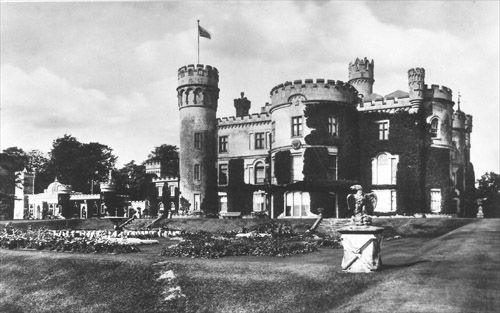


Comments