

Blog 51 1897 Teston Kent - An Act of patricide by William Betts

John Betts was a quiet well respected local man, working as a shoemaker and growing fruits to sell to the community. His son William was very different, lazy and quarrelsome, which became fatal for John.
John Betts was born in 1819 in Teston, Kent.

The firstborn child of John Betts (Sr.) and Sophie Everest. His only full sibling, his sister Harriet, was born in 1820.
In 1822, when John was three years old, his mother died at age 26 during childbirth, along with his newborn brother Joshua.
In 1826, when John was six, his father married Susannah Roots, who was eighteen. Together, they went on to have seven more children. However, tragedy struck again when their daughter Susannah, born on 25 June 1839, died from convulsions on 16 April 1840.
By 1841, when John was 22, he worked as a cordwainer and lived at home on Teston Street. That same year brought further upheaval: his father died suddenly from heart disease on 25 February at age 45. Susannah, who was 32, was left a widow with four young children and was one month pregnant with their daughter, Elizabeth, who was born in October.
On 11 Nov 1845 at St Peter & St Paul Church, Teston, John Betts, age 26, married 21-year-old Elizabeth Mercy Drury, daughter of Samuel Drury, from Birling, Kent.
Elizabeth Mercy Drury, John's wife, experienced family loss early, losing her father, Samuel Drury, when she was age 1. One of her older siblings, Mary Drury, died on 14th March 1841 at age 22, from a spinal affliction.
On 17 February 1847, Elizabeth Betts, the youngest half-sister of John Betts and the daughter of John Betts Sr. and his second wife, Susannah Roots, died at five years and four months old from meningitis.
After enduring many hardships, Elizabeth and John were likely overjoyed when their first child, John Jr., was born in May 1848, then son William's arrival in November 1850.
By 1851, the family was living on Teston Street, where John worked as a boot and shoemaker. During this period, their home became busier when they took in an apprentice, John Baldock, and cared for 10-month-old Bertha, the daughter of John's sister Harriet. At the same time, Harriet worked as a live-in servant for an attorney on Maidstone High Street, highlighting the family's changing situation.
In October 1852, John and Elizabeth welcomed the birth of their son, Samuel.
Yet tragedy returned on 17 November 1855 when Elizabeth's sister Lucy died at the age of 34 from Tuberculosis. In the aftermath, her widowed husband, James King, and their three young boys, aged 7, 4 & 1, all moved in with Elizabeth's mother to help care for the children.
In June 1856, Elizabeth and John welcomed their daughter, Elizabeth Mercy. Her birth brought some happiness after earlier losses, providing a moment of respite.
By 1861, the household had changed. John was working alone again, and his eldest son, John Jr., who was twelve, worked as a farm boy, marking another transition for the family.
In 1864, their last child, a son named Albert, was born. His arrival completed their family during a time of change.
In August 1868, Elizabeth’s only brother, William, died at age 51. With his passing, she was now the only surviving sibling.
By 1871, only Samuel, age 18, and Alfred, age 7, were still living at home. Meanwhile, Samuel worked as a farm labourer, while John, age 23, and William, age 20, had joined the Royal Artillery. Adding to the family's changes, their daughter, Elizabeth Mercy, was living at the Coxheath Union Workhouse.
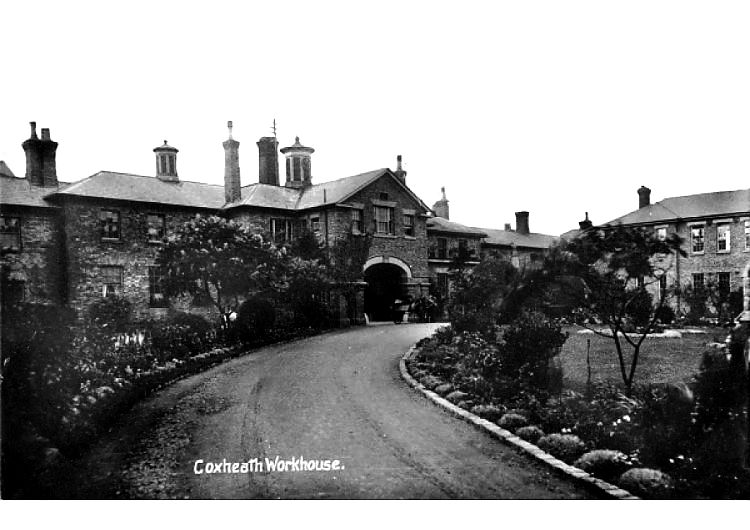
She was classified as an Idiot, showing how the family members' lives had taken different paths.
Tragedy struck again on 13 February 1872 when their daughter Elizabeth Mercy died at age 15 from measles while at the workhouse.
In September 1874, their son Samuel died at age 22. He drowned in the River Medway near the Harrow Inn in Wateringbury.
In 1880, building on previous family experiences, John Jr., son of John and Elizabeth, married his cousin Bertha Betts, who was the daughter of Harriet (John Jr.’s paternal aunt and John Betts’s sister). He began work as an attendant at Barming Asylum, possibly influenced by his experience with his sister Elizabeth Mercy.
By April 1881, John and Elizabeth resided on Livesey Street in Teston with their youngest son, Albert. A lodger named John Russell, who worked as a local farm labourer, also lived with them.
On 6 June 1881, Elizabeth passed away at age 57. She died from dehydration after five weeks of chronic diarrhoea.
In April 1891, John Betts was 72 and still working as a shoemaker, living at Teston Corner. His son William, age 40, had returned home and worked as a cricket ball maker. Albert, age 25, was a gamekeeper’s labourer. John Jr. and Bertha’s son, Arthur J. Betts, age 9, was also staying there. Arthur was John Betts’s grandson and the second-oldest boy in his family, which included four sisters. Since Bertha had recently given birth to another son, Arthur may have enjoyed the quieter house with his male relatives.
On the evening of Thursday, 22 July 1897, the village of Teston was shocked when 78-year-old John was murdered. The crime deeply unsettled the community. His son William, age 46, went to the Malling police station and turned himself in, saying, “I have knocked my old man down, you had better go and see if he's dead.”
The police went straight to the Betts family home and found John dead, his body still warm. He had serious wounds on his head, and his hands were also injured, suggesting there had been a struggle. William, who was already at the police station, was arrested and charged with his father's murder.
The inquest was held on Friday, 23rd July, at the North Pole Inn at Teston before Mr T Buss from Tonbridge.
The jury, led by foreman Mr Cable, included the parish vicar, Rev. G. Everard, and several other prominent residents, showing the community's involvement in the proceedings.
The tragedy had a profound impact on the parish, where John had lived his whole life and was well-liked. A large crowd gathered from Teston and nearby Wateringbury, both inside and outside the North Pole Inn on Saturday. Most people came hoping to see the accused rather than to hear the verdict. The prisoner arrived with Superintendent Hoare and two police constables. He was brought from the Malling lock-up to the inn in a wagonette. He looked closely at the people gathered but showed little emotion. After getting out, he took his seat in the jury room next to the Coroner.
William, described as a smart-looking man who had served in the Royal Artillery, faced doubts about his responsibility for his actions. When he was taken into custody, he made the following statement:
"It seems as if there is a large lump on the top of my head, and it makes me feel I must hang down.’’
John Betts’s body remained at his house, a rustic home surrounded by fruit land in Malling Wood, just a ten-minute walk from the North Pole Inn. The jury left to view his remains.
Despite his injuries, John was said to look peaceful. Except for the wound behind his ear, it might have seemed he died of natural causes.
The evidence revealed that William, who had not worked for more than twelve months, stated upon being charged, "He is dead, is he? We had a few words, and I hit him with my fist, knocking him down in the corner. He got up and said, ‘I will have no more of this.’ I then took up the chopper and knocked him down.”
People said the fatal argument started because John objected to William digging up and selling his father’s potatoes.
The Coroner’s first witness was Albert Betts, the youngest son of John, who was disabled. He was called to give important testimony.
William did not look at his brother during the ten minutes he was in the room and seemed indifferent to his testimony. It was clear that Albert did not want to say more against his brother than he had to.
He said he was a farm labourer and lived with his father and his brother William at Teston Corner.
When questioned by the Coroner as to his father's general health, he stated that he only complained of his eyesight, and no doctor had attended him for some months. He had slept at home on Wednesday night and left for work about twenty minutes past five the following morning. He saw his father in bed when he got up that morning, but did not see his brother. He reached home again just before seven o'clock, and it was then he learnt his father was dead.
The Coroner: "Were your brother and father on friendly terms, or otherwise''?
Albert: (after some hesitation) ‘’Sometimes they were. and sometime. not.’’
The Coroner: ''Have you heard any disagreements recently between them?"
Albert: "No."
The Coroner ''How long do you think it has been since they had any words?"
Albert: I could not tell you properly. a long time ago. I heard no disagreement lately.”
The Coroner: ''Have you ever seen your brother strike your father. "
Albert: "No, Sir, not lately." The Coroner: "Have you ever seen your brother strike your father?" Albert: "I have, about twelve months ago."
The Coroner ''When he struck your father, did he use any instruments, or did he strike him with his fists?''
Albert: "Not with an instrument, with his fist.''
The Coroner ''What was the reason, do you know?
Albert: “No. I was not in when the quarrel started''
The Coroner ''Did you see your father strike your brother?''
Albert: ''No, Sir''
The Coroner: ''Can you tell us how the windows in the front room of the cottage became broken? You know they are broken?''
Albert: ''I know they are broken, but I don't know how they were broken properly."
The Coroner: "Was it in consequence of a quarrel between your father and brother?''
Albert: ''That I don't know, sir. I was not often at home''
The Coroner: ''Did your brother follow any occupation, any trade?''
Albert: "He was generally at home. It's been around nine months since he did any work"
Inspector Hoare produced the chopper.
The Coroner:" Have you seen that chopper before?"
Albert: ''Yes. It belonged to my father.”
The Coroner: ''Where was it generally kept?''
Albert: "In the washroom''
By foreman of the jury: ''Have you ever heard your father say he was afraid of your brother?''
Albert: ''No, sir.”
The Coroner: ''Have you ever heard your father ask your brother to go to work?''
Albert: "Yes, Sir." Foreman: "How long ago?" Albert: "Some time ago." The Coroner: "Has your father sold any fruit this year?" Albert: "Only gooseberries, sir. I took the money and kept it at home."
Albert: "Kept it at home, sir"
The Coroner to William: ''Do you want to ask any questions?"
William: I will when I hear what he says. I haven't heard anything you say, so I can't ask any questions"
The Coroner to Albert: "Is your brother deaf?"
Albert: "He's not so deaf but what he can hear"
The Coroner, addressing William in a slightly louder voice, said, “You can ask the witness any questions"
William: "I will when I feel occasion"
Albert was then dismissed.
The atmosphere was tense when the Coroner called Mrs Emily Chapman, a middle-aged labourer’s wife. As she entered, William jumped up. He was pale with anger. He shouted, "Is that woman to give evidence?" Mrs Chapman hesitated near the witness chair, close to the prisoner.
The Coroner reassured William that he could question Mrs Chapman after her testimony.
Though calmed, William still bristled. He fixed his glare on Mrs Chapman and growled through clenched teeth, "You have caused all this."
After her statement, William questioned Mrs Chapman at length. He was intent on showing his blame. When she left, he lost interest. Reports said Mrs Chapman gave clear, fair evidence.
After the Coroner's summary, the jury asked to deliberate in private. The prisoner, police, and press left the room.
After half an hour, the jury returned a verdict of "Wilful murder" against William Betts. He showed no reaction.
The inquest lasted four hours. When William was led out for transfer to Maidstone prison, the large crowd in front of the house visibly irked him. Frustration showed in his clenched jaw and tightened brows. He boarded the vehicle, thumbed his nose, splayed his hand, and said, his voice sharp with annoyance, "Take that."
A reporter spoke with Teston locals about William Betts's odd behavior. He was known for his violent temper. His family said he had a "mental warp of some madman." One informant said William was sometimes cheerful, sometimes withdrawn. Once, working together, William dropped his tool and started hitting trees with his fists.
The reporter inquired whether William had been drinking during these rages. The reply: "Absolutely not, he was always sober. I have long suspected something amiss with his mind, and these facts should be revealed."
William was brought before the magistrates at Malling on Friday, 30th July, and was remanded.
On the morning of Friday, 6 August, the charge against William Betts was examined again at Malling Police Court. Colonel Luck presided.
William was brought from the county jail in Maidstone by cab, accompanied by Inspector Hoare and another constable.
Placed in the dock, William appeared anxious and trembled. He listened intently as Mr Wildes, the magistrates’ clerk, recited the charge, remaining mute.
At the trial's start, only a dozen people besides court officials and witnesses were present. Whenever someone entered, William looked at the door. The energy and anger he displayed at the inquest were gone. He refused to question witnesses, shaking his head or remaining still when asked.
While his brother Albert repeated his earlier testimony, William scanned the courtroom, shifting in his seat. Finally, he slumped still, staring blankly, fingers twitching.
Albert stated he had never witnessed William’s violence but had heard him threaten to kill their father a few months prior.
When Mrs Chapman took the stand, William glowered at her, his jaw clenched and fists tight with resentment. She recounted overhearing heated arguments between William and his father. He trembled, his face pale and eyes wide with anxiety. When pressed, she answered that she heard the deceased cry, "Oh, Bill, what are you doing?"
Alfred Russell, a fruit grower and licensed victualler at Teston Corner, took the witness stand.
John had confided in him about William's conduct on July 22nd. That Thursday afternoon, John joined him at Russell’s house and received 8d—a sixpence and two pennies.
The Clerk said it was only proper to mention conversations that happened in William's presence.
Supt. Hoare:
Supt. Hoare: "I propose the motive for murder was this eightpence. On Tuesday, he lacked funds; I intend to trace the coins to the prisoner."
To clarify, a detailed account of events at the Woodman Inn in East Malling was given. Florence Newman, the landlord's daughter, was called as a new witness. testified that between 3:30 and 4:00 on Thursday, William entered the tap room to order a pint of ale. When she brought it, he blurted, "I have lost my sixpence." Mr Newman then entered. William repeated the claim before departing for his home.
Supt. Hoare said he found no money in the victim's pockets or anywhere in the house.
Police and medical testimony from the inquest was repeated, with Dr Fry adding that the deceased was blind in one eye and acutely deaf.
When formally charged, William looked abject and defeated. He avoided every eye. His shoulders sagged. His answer was scarcely audible as he murmured, "I have nothing to say."
Colonel Luck committed him for trial on the charge of wilful murder at the next Assizes, which would not take place until the middle of November.
The trial took place at the Kent Assizes with Mr Justice Channell

Representing the prosecution were Mr G. J. Talbot and Mr Dering, instructed by Mr Frayling of the Treasury. For the defence, Mr W. O. Willis acted.
William pleaded not guilty. He looked very distressed, and soon after the proceedings began, he started crying. He was then given a seat in the dock.
Addressing the jury, Mr Dering explained that the deceased, aged 77 or 78, was a shoemaker living in a cottage at Teston with his two sons, William and Albert Betts. Known as a steady, hard-working man, Albert contrasted with William, who had not worked since the last hoppicking season. Frequent arguments between William and his father made it understandable that his father would be unhappy about supporting an adult son who refused to work. On several occasions, William had threatened to “do for” his father. On July 22nd, Albert left for work between five and six in the morning, leaving William and their father at home. Not seeing his father alive again, Albert did not return until seven in the evening, by which time everything had happened.
A neighbour, Albert Russell, saw the deceased around eleven that morning. The deceased complained to him about his son, William. Russell also bought some currants from him and paid for them.
Following Russell's account, at one o'clock, Mrs Chapman, a nearby resident, spoke with the deceased. After that, only William saw him alive. Shortly after six that evening, police found the old man in the back kitchen with a large head wound about four inches long and an inch deep at its deepest point.
On the bench about two feet away, a chopper with fresh bloodstains was found.
Around six o'clock, William turned himself in at the Malling Police Station. He said, 'I have knocked my old man down. You had better go and see if he is dead.'
The next witness, Albert Betts, confirmed that the chopper belonged to his father.
Emily Chapman, who lived near the Betts family, said she heard William arguing with his father on the morning of the crime. She had often heard them quarrel before, and once heard William say, "You old——, you ought to have been dead long ago."
Next, between ten minutes and a quarter past three, George Long, a labourer from Teston, testified to seeing William leaving the back of the house and heading toward East Malling.
P.C. Butler said he was at Malling Police Station on July 22nd at ten minutes to six when William Betts came in and said he wanted to give himself up, as he had 'knocked his old man down, and you had better go and see if he is dead.' William was sober but excited, looking wild-eyed.
Superintendent Hoare was the next to testify. He said he went to the deceased’s house and found him lying dead in the back room. He then drove to Wateringbury to get Dr Fry. When he returned to the station, he told William, 'Betts, this is a very serious matter,' and charged him with murder. William replied, 'He's dead, is he? We had some words. I hit him with my fist and knocked him into the corner. He got up and said, I will have no more of this, and was going out of the door, when I knocked him down with the chopper.'
Further questioned by Mr Willis, the same witness said that William seemed depressed and his eyes had a wild look.
The next medical witness, on the night of the murder, Walter Ernest Fry, a surgeon from Wateringbury, said he saw the body. Performing a post-mortem the next day with Dr Brown, he found a large cut below the left ear, about four inches long and one inch deep at its deepest point, which had severed the internal jugular vein. The chopper found nearby matched the cut, and the blow must have come from the front. Additionally, there was a wound on the back of the head about three-quarters of an inch long, a bruise on the outer angle of the left eye, and a skin cut across the back of the right hand.
Dr Brown confirmed this evidence, and the prosecution then finished presenting its case.
Choosing not to address the jury again, Mr Dering let the case go to them as it was.
For the defence, Mr W. C. Willis stated that it was clear William and his father had not got along for some time. While William did little work, he did some. On the morning in question, they argued, and at lunchtime, when William returned, his father 'nagged' him. A struggle followed, and William hit his father with the chopper. The blow might have been in self-defence, or, as William said, it happened in the heat of the moment. Mr Willis believed that, after considering all the evidence, the jury would see that William did not intend to kill his father.
No attempt was made by the defence to argue that William was insane.
His Lordship, in summing up, said that the deceased met his death at the hands of the prisoner; there could be no doubt. The prisoner himself, as well as eight of the witnesses, told them that, and the question arose as to the circumstances under which that blow was struck. To kill another man with a blow by a deadly weapon, such as the one used in this case, was, in law, murder. It was murder if the person who struck the blow had not actually formed any deliberate intention to kill. To strike a fatal blow without any lawful cause was murder. There were circumstances which would reduce the crime to one of manslaughter, but mere words were not sufficient for that—there must be something more. They had heard the prisoner’s version. He said there was some kind of a struggle between ‘them when he knocked the deceased down. The father got up and was going out of the back door, then the prisoner, according to his statement, hit him with the chopper. From this, it would appear the deceased was dealt the blow from behind. In that case, there could not have been any struggle, so as to reduce the crime to manslaughter. What they had heard from the doctors, however, did not make this appear to be the case. By the position of the wound on the neck, the deceased must have been facing his assailant when he was struck. It might be that the accused got in front of his father to prevent him from going out the door. There was no evidence, apart from the prisoner’s statement, that a struggle had occurred at all; the state of the kitchen did not suggest anything of the kind. From the evidence, they could assume that the prisoner was a violent person, and although he now looked like a wrecked, broken-down man, no doubt he was much stronger than his father, who, being aged, was not likely to do anything to provoke a physical struggle. He (the Judge) did not think there was anything else he could put before the jury, but it was his duty to point out that to use a deadly weapon like the chopper mentioned was, prima facie, murder. Of course, it was for them to say whether they thought there were circumstances sufficient to reduce the crime to manslaughter.
The jury deliberated briefly, then found William Betts guilty of murder.
Asking the Foreman, the judge said, 'Without any premeditation, you find there was no provocation to reduce murder to manslaughter, as I explained, but I take it you recommend him to mercy?'
'Well, if mercy can be extended to him, we would be very happy for him to receive it,' the Foreman replied.
'I must ask you to explain what you mean. Your verdict is a little unclear,' said the judge. I explained about provocation, and I also told you that premeditation does not mean someone plans to kill before the act. If a man uses a deadly weapon and kills another, he may do it without thinking about it beforehand. Is that what you mean?'
'Yes, we considered that, but we cannot reach any verdict other than that the prisoner is guilty of murder. At the same time, we want to point out that there was no premeditation,' the Foreman answered.
The judge asked, 'I take it you recommend him to mercy?'
The Foreman replied, 'Yes, your Lordship.'
William was asked if he had anything to say before the sentence of death was pronounced. He replied firmly, 'No, Sir.'
The judge put on the black cap and passed the sentence of death in the silent courtroom.
'William Betts, you have been convicted of the terrible crime of murdering your own father. The law requires this sentence, and I have no choice. I am only the agent to pronounce the sentence the law has set for your crime. The jury recommended mercy because the crime was not premeditated. That recommendation will be sent to the proper authorities, but at this solemn time, I urge you not only to think of human mercy, but to seek mercy from God.' The sentence of death was then passed.
This was Mr Justice Channell’s first Assize and the first time he had to pronounce a death sentence. He was clearly moved by the seriousness of the moment, and he did not pass the sentence without emotion.
William seemed deeply affected by his situation, and he walked unsteadily as he went down to the cells. He looked very different from when he last appeared before the magistrates. The stress of his position had clearly changed him. His hair had turned white, his beard matched, and people said he looked at least ten years older than before. The session lasted only two hours, and he stayed seated except when he received his sentence.
The execution was scheduled for December 16th, casting a sombre shadow over the days before. Billington, the executioner, was busy with other duties on the 14th. Hope dwindled as people whispered that the Home Secretary had spoken with Mr Justice Channell about the jury's plea for mercy, and consulted with prison officials about the prisoner's troubled mind. William was gripped by deep despair, feeling as if the weight of the world pressed upon him.
Meanwhile, his brothers, Albert and John Jr., had not come to see him, and it seemed unlikely that any relatives would visit. He seemed completely alone.
Despite feeling isolated, William remained quiet after his sentence. He was not completely overwhelmed by sadness. He ate his meals, tried to seem cheerful, and slept well.
During his first days in prison, he did not speak to anyone and seemed uninterested in the chaplain’s support. However, as time passed, he came to welcome Rev. W. B. S. Watson's visits.
Throughout his confinement, he caused no trouble for the warders assigned to watch him and was called one of the most obedient men ever in the prison. Later, he became very sorry for what he had done and valued Rev. Watson’s visits. He told people more than once that losing his temper had led to his downfall. He admitted hitting his father with the chopper he grabbed in haste, but said he never meant to kill him and was deeply sorry for causing his death. In his last week, he often said he was ready to die and did not want to stay alive any longer.
Eventually, two relatives and a friend came to the prison, but Betts chose not to see them for various reasons. However, he did want to see his two brothers, and on Tuesday, December 14th, John and Alfred, along with his sister-in-law and niece, visited him. Their meeting was emotional, though William showed less feeling than they did. They were surprised by how much he had aged, but were relieved to see he was coping. William thanked his brothers twice for coming and nearly broke down when they said goodbye.
The following day, he slept reasonably well on Wednesday night and was woken up between six and seven on Thursday morning. He received the sacrament in the chapel, then had his usual breakfast of bread and butter, eating only a little. After that, he waited quietly for the order to go to his execution.
Meanwhile, the executioner, James Billington, spent the night inside the prison grounds.

On Thursday, December 16th, people began gathering outside Maidstone prison in the early morning, gas lights still shining and the chill lingering. By eight o'clock, the crowd had swelled to about 200 or 300. In the fifteen minutes before eight, the prison door opened four times. First came two reporters, one representing the Kent Messenger. Then, the Acting Under Sheriff arrived, followed by the Prison Surgeon and the County Coroner. No one else was permitted entry. As the hour drew nearer, tension gripped everyone present.
As the moment approached, when the prison bell rang softly, the Governor and Rev. W. B. S. Watson led the procession, with the chaplain reading the burial service. The executioner Billington and the wardens followed, along with the Deputy Under Sheriff and the prison surgeon. William walked firmly and did not resist as he went to the scaffold.
Upon reaching the scaffold, William submitted quietly to the restraints, his face pale but composed. The final steps blurred by in a haze of dread. Then, with a muffled thud, the trapdoor opened, the sound smothered as if the board itself mourned. Death was mercifully swift, sparing further suffering.
Immediately afterwards, the black flag was raised over the prison wall, signalling that , according to English law, justice had been served. The crowd left, and by the time the officials departed, the street was back to normal.
Later that morning, the inquest into William's death was held at 9:15. Mr T. Buss, the County Coroner, and Mr T. King from Week Street were chosen as the jury foremen.
During the inquest, they saw the body in the shed where the execution had happened. His face was bluish, but there was only a faint red mark around his neck from the rope.
At the inquest, Mr Green, the prison governor, said the execution was carried out in accordance with the law.
Similarly, Dr Charles E. Hoar, the prison surgeon, said he examined the body and found that death resulted from a dislocated vertebra; it was instant.
To conclude, the Coroner explained that inquests are required for executed criminals, and it was up to the jury to decide if the death sentence was carried out properly and if the person died from hanging. The jury agreed with the evidence.
Life After
John Jr continued working at the Asylum as an attendant, and the family remained in Barming Heath and died in 1927, at the age of 79
Albert moved around the Teston/Wateringbury area, living on farms and working as a labourer. In September 1939, he was a patient at the Public Assistance Institution, Coxheath, Maidstone, part of the Maidstone Union workhouse. He died in July 1946 at the age of 81.
Sources
1. (1897 July 31). A Dreadful Deed. Whitstable Times and Herne Bay Herald pg 5
2. (1897 August 7) The Teston Murder. Kent Messenger pg 5
3. (1897 November 27) A Kentish Murder Kent Messenger pg 5
4. (1897 December 04) The Condemned Man Kent Messenger pg 5
5. (1897 July 31) The Inquest Folkestone Chronicle pg 5
6. (1897 December 18) Execution at Maidstone Kent Messenger pg 5
7. Bring your backstory to life Ancestry® | Genealogy, Family Trees & Family History Records. Available at: http://www.ancestry.co.uk/
8. General Register Office (no date) General Register Office - Online Ordering Service - Login. Available at: https://www.gro.gov.uk/gro/content/certificates/
9. Archive, History’s colourful stories in black and white, Home | British Newspaper Archive. Available at: https://www.britishnewspaperarchive.co.uk/


Comments