

Blog 52 1925 Eridge Sussex - The Eridge Park Murder

Joan Annetts was often sent to the local grocers with her basket and shopping list by her mother, but on one tragic day she never returned and was never seen alive again.
George Frederick Annetts was the son of a Berkshire farm labourer.
In 1911, when he was 22, George worked as a handyman at Eridge Castle, which belonged to Reginald William Bransby Nevill, the 2nd Marquess of Abergavenny.

While working at Eridge Castle, George met Emma Brookfield, a 28-year-old stillroom maid from Marchwiel, Wrexham, Wales. When Emma became pregnant in 1914, they left Eridge Park to get married in Paddington, then moved back to Berkshire. Their first daughter, Joan, was born in Newbury in October 1914. Later, they visited Emma’s family in Wales, which was considered safer during the war. On 9 July 1918, Emma gave birth to another daughter, Dora, in Eyton, Denbighshire.
In 1921, George could not find work in Berkshire. The family moved back south to Eridge Castle. George joined the domestic service team, and they settled into Bohemia Lodge on the Eridge Park Estate.
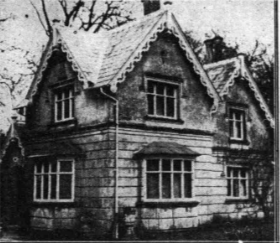
Emma stayed at home, and their daughter Ida was born in July 1922.

Their youngest daughter, Amy, was born in January 1925.
Life was simple and safe for the family. George went to work at Eridge Castle each day. Joan, who was 10, attended school. Dora, age 6, was just starting school. Emma stayed home to look after Ida, who was 2, and the baby, Amy.
Emma Annetts often sent Joan to Mr Lucas's grocery shop. Around 5 o’clock on Friday, 24 April 1925, she sent 10-year-old Joan to buy groceries. Joan left home with the basket and order book, smiling as she said goodbye to her mother.

When Joan did not come back as expected, Emma grew worried. Joan was not usually late.
When George Annetts came home from work, he learned that Joan was still not back. At first, he thought she might be lingering, perhaps watching the boys play cricket, since she would pass the cricket ground on her way home. By eight o’clock, with no sign of Joan, both parents became anxious. George went to Mr Lucas’s shop to ask about her and found out Joan had left almost two hours earlier. As it got dark, their worry increased. After searching without success, George returned to the village and told a local constable that his daughter was missing.
Search parties with lanterns and electric torches looked through the park. Around eleven o’clock, Mr Beaumont, Lord Henry Nevill’s chauffeur, led a group and found Joan’s body. She was lying among the rhododendrons near Heave Gate on the estate, on her back with her head resting on her left arm. Her right arm was raised, as if she had tried to protect herself, and her fingers were cut. The main wound was on the right side of her neck, and there was blood. Next to her were the grocery basket and a bunch of primroses she had picked.
Someone searching found a heavy stick with human hair on it along Joan’s route from the grocer’s.
After Joan was found, the police were told right away. A message went to Inspector Edwards in Crowborough, and Superintendent Budgen from Uckfield was called to the scene.
Police gathered to thoroughly search the neighbourhood.
The search for the person responsible became urgent. Lieut. Colonel Ormerod, the Chief Constable of East Sussex, watched the investigation unfold and asked Scotland Yard for help. That same day, Chief Inspector Nicholls and a colleague arrived, bringing more experience to the county police.
Bloodhounds from West Sussex were brought in. They followed a scent trail that led some distance toward Tunbridge Wells, giving the searchers some hope.
Joan attended school in Frant, and people described her as interesting, sweet-natured, and very bright. She liked shopping for her mother and never minded the mile-and-a-half walk to the shop. As one person told a journalist: "Joan was the eldest of four children. Her terrible death has been a great shock to her parents and brought grief and sympathy to all who know the family."
After several days of searching for clues, the police arrested 15-year-old George Jeffery on Monday evening. He was a gentle-looking boy who lived with his family at Eridge Green Lodge and worked as a gardener on the Eridge Estate.

When he was charged with Joan's murder, it changed everything for his family overnight.
Charles Henry Jeffery was a farm labourer born in Pembury. His family moved from Marks Cross to Station Bridge in Wadhurst. There, he met Catherine Alice Humphrey from Wadhurst. Her father also worked as a farm labourer. When they learned Catherine was pregnant, they married on 13 July 1901 at Wadhurst parish church. Catherine gave birth to Alice Edith on 25 January 1902.
They moved to Pounds Rough Cottage in Pembury, Kent. Charles continued working as a farm labourer. Catherine had four sons: Charles William, born in September 1903; John, known as Jack, born in June 1907; and George Jeffery, whose full name was Frederick George, born on 25 September 1909.
The oldest child, Alice Edith, became pregnant at 17 with Percy Charles Worsell, who was 27. He worked as a van boy for oil stores in Southborough. He had joined the military during the Great War. They married in October. By 1921, Alice had moved out of her parents' home to Silverdale Road, High Brooms. Percy was away serving in the military.
The rest of the Jeffery family lived at Windmill Lodge in Eridge Green.

Charles Henry was working as a gardener's carter at Eridge Castle for Lord Nevill. The oldest son, Charles William, was 18 and served in the Army's 4th Royal West Kent Defence Forces. He was stationed at the Drill Hall, 12 Woodfield Road, Tonbridge. Jack, whose real name was John, was 15 and worked as a labourer for Mr Forte at the Gun Inn (now known as Nevill crest & Gun) in Eridge. George, then 11 and still in school, would later work as a gardener's boy. He likely got this position via his father. The youngest, Albert, was 6 and stayed at home with their mother, Catherine.
In April 1923, the Jeffery family celebrated when nineteen-year-old Charles William married Mary E McBrearty, a young woman from County Donegal, Ireland.
On the night of the murder, George’s father, Charles, had helped search for the missing girl in Eridge Park. The family must have been shocked when the police took their son and charged him with Joan Annetts's murder.
On Tuesday, 28th April, 15-year-old George Jeffery was taken before the Crowborough Police Court, without legal representation.
After Inspector Edward gave evidence, briefly, for two minutes, there were whispers of uncertainty.
Superintendent Budgen, voice steady, asked for a remand until the following Tuesday to confer with the Director of Public Prosecutions. He explained that, though the prisoner was under 16, he would usually be sent to a remand home. 'In my opinion,' the Superintendent intoned, 'he is in such a condition that the circumstances do not justify that, and I apply that he shall be sent to Brixton prison.'
With a sharp rap of the gavel, the Magistrate ordered a week’s remand to appear at Mark Cross's.
The inquest began at the Parish Hall in Eridge on Wednesday, 29th April, with Dr W. A. Dow, the Deputy Coroner for East Sussex, presiding.
The accused George Jeffery was not present.
The proceedings were brief, focusing solely on identifying evidence and recovering the body. The jury first visited the scene of the tragedy.
George Annetts explained that he worked as an odd-job man and indoor servant at Eridge Castle. He identified his daughter's body, saying she had turned ten last October. He last saw her at 5:45 on Friday morning.
Thomas Beaumont, who lived at Thatched Cottage in Eridge Green and worked as Lord Nevil’s chauffeur, said he joined the search party for the child and was the one who found her.
The Coroner: ''Can you explain to the jury how she was found.''
Thomas Beaumont: ''She was lying dead on her back under some laurel bushes.''
The Coroner: ''She was found by you, on her back under some laurel bushes?''
Thomas Beaumont: ''Yes, the body was about five yards from the path.''
The Coroner then spoke to the jury: ''That is all the evidence I propose calling for today. Details on the condition she was found, the cause of death, and other things and statements will be brought before you next time''
The inquest was adjourned and scheduled to continue on Wednesday, May 20th, at 10:30 pm in the parish hall.
On Friday, 31st April, George and Emma Annetts buried their eldest daughter, Joan, in the children's section of Eridge Parish Church, Holy Trinity. Many local people attended, and numerous flowers were sent as a sign of sympathy and to remember Joan.
At noon on Tuesday, 5th May, George appeared again before the magistrates at Marks Cross Children's Court.
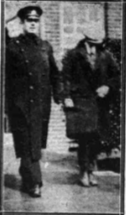
There was little public interest in the proceedings, with fewer than twenty people outside the court when the prisoner arrived. The crowd included five women, three farm workers, about ten young people, and members of the press and cameramen. Ten minutes before noon, a dark green van from Brixton Prison arrived. The prisoner, wearing a grey cap pulled low over his face and a dark overcoat, quickly got out with two warders. Someone called out, “Hello, George,” and for a moment, his face was visible as he glanced toward the hall, smiling and appearing well. He then pulled his cap back down and was quickly taken into court.
The magistrates present were Mr J. W. Sidey, Mr J. Boldoro, Mr O. T. Corke, and Mr J. Hallett.
Also present were Mr H. P. Masson, the Magistrates’ Clerk, Messrs. C. D. Nicholls and D. I. Clarke, and Mr Charles Berry of Tunbridge Wells, who represented the boy.
Since it was a Children’s Court, only the boy’s relatives and about a dozen members of the press were allowed to attend. George’s family included his father and his four siblings.
Inspector Edwards repeated the evidence he had given about the arrest at the previous hearing.
When asked if he had any questions, the boy replied, ''No.''
Mr Berry, for the defence, said he had no questions at this stage of the case.
Superintendent Budgen told the Bench that the Director of Public Prosecutions had instructed him to request a further remand.
Mr Berry agreed to the request. When the Chairman told George he would be remanded until the following Tuesday at 12:30 pm, George replied, “Yes, sir.”
On 12th May, George Jeffrey was taken from Brixton Prison to Mark Cross Police Court in a police van, accompanied by two warders.
Mr Arthur Sefton-Cohen represented the Director of Public Prosecutions, while Mr Charles Berry of Tunbridge Wells acted for the defence.
Mr and Mrs Annetts gave their testimonies, along with George’s father, siblings, and an aunt.
At the outset, Mr Berry said he wished to give notice that he objected to the admissibility as evidence of certain statements taken by the prosecution. Later, when Mr Sefton-Cohen was outlining the case, Mr Berry objected to a statement allegedly made by the accused.
While outlining the case, Mr Sefton-Cohen said, "The little girl, Joan Annetts, was sent to shop at Eridge Green but never returned. Her body was found later that evening under a rhododendron bush in the park. A hob-nailed boot print was found near her body, and a similar print was discovered near the accused’s home. The boy’s boots matched these footprints. Stains were seen on his right trouser leg, and when asked about them, he said he had been moving old rusty salmon tins and must have spilt rusty water on his trousers. The clothing was sent to Mr Webster, the senior Home Office Analyst.
The following Monday, Jeffrey was taken to Crowborough Police Station, where he said, ''I will tell you all I know about it, but keep it from mother.'' After being cautioned, he said, ''I done it, and wish to tell the truth about it.'' Mr Sefton-Cohen added that the boy had made a lengthy statement, which he wanted to read, but Mr Berry objected unless it was proven that no undue pressure had been used to obtain the statement.
Mr Sefton-Cohen then called Chief Inspector Nicholls to the witness box to show that the statement was given voluntarily after the boy was formally cautioned.
Chief Inspector Nicholls: ''I saw the accused on April 27th at 10.30 p.m. at Crowhorough Police Station. Sgt. Clark accompanied me. I said to Jeffrey ''You know we are police officers from Scotland Yard, and that I am enquiring about the murder of Joan Annette?” Jeffrey said ''Yes, I've done it.” I then cautioned the lad, and he said ‘’I want to tell the truth.” Then he made a statement, which Sgt Clark took down in my presence. This statement was afterwards read over to the accused, who signed in my presence.''
Mr Sefton-Cohen: ''Was anything said by you or the accused other than what you have told us?''
C. I. Nicholls: ''No. sir.''
Mr Sefton-Cohen: ''No threat or favour was made use of to get the statement?''
C. I. Nicholls: ''No. sir.''
Cross-examination:
Mr Berry: ''The accused had been under the guardianship of police officers since five o’clock that day?''
C. I. Nicholls: ''No, sir. I arrived at 9.30 pm and commenced to take the statement at 10.30 pm and finished at 11.30 pm or a little later''
Mr Berry: ‘’ I put it to you that the accused at that time was in a highly nervous and exhausted condition.''
C. I. Nicholls: ''No, sir.''
Mr Berry: “It is a fact that during the day, he had been subjected to a series of prolonged interviews''
C. I. Nicholls: “I saw the lad in the morning, and in the evening, other inspectors saw him. I don't remember any other interview during the day.''
Mr Berry: ''Do you consider he was in a rational state of mind and capable of making a statement?''
C. I. Nicholls: "Yes, sir."
Mr Berry: "Do you still say that the statement was not obtained through pressure from several police officers?"
C. I. Nicholls: ''I do.”
Mr Berry argued that the main issue for the Bench was whether the accused’s statement could be used as evidence. He pointed out that the accused had been seen by many police officers, including Sergt. Savage and Inspector Edwards at six-thirty on Saturday evening, then Supt. Budgen, and later had a long interview with Inspector Edwards, Chief Inspector Nicholls, and Sergt. Clark. There were no interviews on Sunday, but on the following day, the boy was interviewed in the morning and again from five o'clock until after midnight. Mr Berry compared these methods to historical and current practices of extracting confessions, suggesting that the police used subtle but effective ways to get confessions. He said that pressure on a boy would be greater than on a man and argued that the statement was obtained by repeated questioning of the accused, which made him very nervous. He cited legal authorities to show that the statement should not be admitted as evidence unless the police proved it was given freely.
The Chairman said that, considering the accused's age, they preferred not to have the statement read at this time. They had not yet decided whether the statement was admissible.
They continued with other testimonies:
Godfrey John of Crockham Hill, Groombridge, a surveyor employed by Mr Charles J. Parris of High Street, Tunbridge Wells, said that on 8th May, he took measurements at Eridge Park with Inspector Edwards. He later prepared a plan showing the distance between Eridge Green and Bohemia Lodge, the Annetts’ home, measured in inches per mile.
Next was Emma Annetts, who told the court she was Joan's mother and the wife of George Frederick Annetts, and lived at Bohemia Lodge in Eridge Park, in the parish of Frant. She said her husband worked at Eridge Castle.
On Friday, April 24, her daughter Joan left home around a quarter to five in the evening. Joan took the order book and the fish basket and left for Mr Lucas's shop. She was given 8d to buy some sweets. Joan was healthy, cheerful, and happy. She wore a blue tam-o'-shanter and a blue scarf. She had turned ten on October 3. Emma became worried when Joan did not come back. She went to the Castle to find her husband between eight and a quarter past eight. Mrs Annetts said she did not know the accused boy. Joan had attended St. Mark's School in Broadwater Down but left last Whitsuntide, then went to Frant School.
George Frederick Annett testified that he worked at Eridge Castle, lived at Bohemia Lodge, and had three younger daughters.
He last saw his daughter at quarter to five on April 24. He did not see her leave the house. Joan usually went grocery shopping at Mr Lucas's shop on Fridays or Saturdays, which was just over a mile away and could be reached by different routes. When she did not return, he went to Thomas Beaumont's house, and they decided to search for Joan by car, starting at nine. Later, a search party was formed with local men and PC Terry. Shortly after eleven, he was called to where his daughter was found and later saw her body at the mortuary. He had never seen his daughter with the accused.
During cross-examination by Mr Berry, Mr Annetts said he knew the accused's father, who also worked on the Eridge Estate, but did not know the rest of the family. When he visited the Jeffreys' home, the accused's father offered to help search for Joan and joined one of the search parties that evening.
The next witness was Edward Lucas, Grocer of the stores at Eridge Green.
He said he knew Joan, who had been coming to his shop on Fridays or Saturdays for several weeks to collect groceries. He remembered seeing her on Friday, at about six-thirty in the evening. While Joan was in the shop, a stable lad named Gould came in. Joan left the shop, and he saw her walk quickly toward the park gates, about 50 or 60 yards away. She left about five minutes after Gould. He closed the shop at five past seven. Around eight-thirty, Mrs Annetts came to ask if Joan had been there, and she returned again at about quarter past ten. He later saw the basket with all the groceries, sweets, and the order book still inside.
When cross-examined by Mr Berry, he said Joan left the shop at about twenty to seven. He based this time on events that occurred between early evening and closing.
Edward Alfred Lucas, the grocer's son, confirmed his father's account. He went to the cricket ground and did not recall seeing the accused or his brother Bert. He saw the postmaster, Mr Drawbridge, at about seven-forty, walking alone with his dog.
During cross-examination by Mr Berry, he said Gould was in the shop when he left for the cricket ground, but he did not think Joan was there at that time.
The Next to take the witness stand was Harry Percival Gould, who testified that he was 18 years old and worked as a stable lad. He remembered going to the shop and said he left the stable at exactly six-twenty, according to the stable clock.
He saw Joan Annetts at Mr Lucas's shop. He arrived at the shop around six-thirty and stayed for about three minutes. On his way back to the stables, he passed Jeffery's lodge and saw the accused standing among the laurels, facing the path. They spoke briefly. Later that evening, Gould joined the search party looking for Joan.
When cross-examined by Mr Berry, he said it took about six minutes to walk from the stables to the Post Office. He also said the accused was gardening when he saw him.
Next was Thomas Beaumont, the chauffeur to Lord Henry Nevill. residing in the Thatched Cottage in Eridge Green:
He said that George Annette, Joan's father, called him at about quarter past nine on April 24. After speaking with George, they went to the Gun drive. Later, he went to P.C. Terry's house, but the constable was not home. He met him a few moments later, and a search party was organised. The witness found Joan's body at about quarter past eleven, under bushes at Cobbler's Hole, and after that, another man called out that the girl's basket of groceries had been found.
At this point, there was a slight pause as Joan's parents, who were sitting in the well of the court, were escorted out by Inspector Edward before Thomas Beaumont described finding the body. It was too distressing for them to hear. It was lying on its back, three or four paces from the basket, and was stiff and cold. By his acetylene light, he could see that the girl's face was covered with blood and that there was a wound on the right-hand side of the throat.
Chief Inspector Nicholls was recalled and said he arrived at Eridge Castle grounds around five on the evening of Saturday, April 25, with Sergeant Clark. He saw the accused that evening, about eleven, at Crowborough Police Station. The boy was with Inspector Edwards, and Nicholls decided to take the prisoner's clothing. He put the accused in front of the motor car and went to Eridge Green Lodge, where Sergeant Clark left him with the accused. Later, Sergeant Clark collected the jacket, waistcoat, and trousers. At Crowborough Police Station, Inspector Edwards gave the witness the accused's boots and pocket knife, which had been received from Sergt. Clark, a pair of socks, and the same evening, I handed all the articles over to Constable Henstridge. About twenty past twelve, on the afternoon of April 27, I saw the accused at The Warren, which is on the Post Office side of the village, and requested that he show me some salmon tins and other tins which George had referred to the previous evening at the Crowborough Police Station, when he said some of the tins contained rusty water. They went to the potting shed at the rear of Mr Richardson's house, where a piece of blue cloth was found, which the accused said he had used to wipe the right knee of his trousers and the right seam of his coat.
In reply to Chief Inspector Nicholls's questions, George said: ''I know the Gun Walk. It runs from the little gate opposite our lodge to the black cinder path that leads to the Castle. I was not at the Gun Walk last Friday night. I saw Mr Drawbridge on the carriage drive coming from the cricket pavilion. I was going up after putting my dog away. The first time I went to the cricket field with the dog, I stood at the little iron gate leading to the pavilion, and Mr Drawbridge was talking to my brother Jack, who was looking at the mowing machine. The last time I was at the Gun Walk was Wednesday, April 22. I had my dog with me and walked as far as the brake stack, then turned toward the pavilion and back down the Carriage Drive to go home. I was not out of my house until eight last Friday evening. I heard the church clock strike eight as I was halfway along Carriage Drive.'' The Chief Inspector said this statement was read to the accused, and he signed it in the pocketbook, as it had been put in.
The Magistrates' Clerk (Mr H. P. Mason) made a note of the objection.
Chief Inspector Nicholls continued, saying that on the same day, he received the accused's cap from Sergeant Clark. At half past ten on April 27, he saw the accused at Crowborough Police Station with Sergeant Clark. They were in the Inspector's Office. The witness said to the accused, ''You know, we are police officers from Scotland Yard, and we are enquiring about the murder of Joan Annette "
Mr Berry interrupted: ''Now you are coming to what I have objected to already. Now I make a formal objection to the statement being read''
Mr Sefton-Cohen: “The statement was admissible by law, and there was a reason for putting it before them, for it was a free, voluntary statement, and the officer who took it was adhering to the rule laid down for the guidance of these cases. I am surprised by the hardihood of my friend's suggestion that there might be any reason why the statement should not be read.”
Mr Berry: “I cannot admit it as a voluntary statement''
Mr Sefton-Cohen: ''The officer made no threat and held out no inducement, and he had told them all what he had said to the accused.''
Mr Berry: ''I am going to suggest that pressure had been applied''
Mr Mason (The Clerk) said Mr Berry had, with a certain amount of responsibility, taken objection to the admission of the statement. And he (the Clerk) would like time to consider the matter.
The case was then postponed until the following Tuesday morning at 11, at the same Police Court.
The final Police Court hearing for George was held on Tuesday, May 19.
The Bench was made up of Messrs. J. W. Sidey (chair), O. T. Corke, and J. Boldero.
Mr Sefton-Cohen again represented the Crown, while Mr Berry appeared for the defence.
George arrived in a motor van, wearing a dark grey suit with a soft collar and tie. He sat through the hearing with his eyes fixed on the window behind the magistrates. Other witnesses were called. The court discussed the footprints, the accused's boot tread, and the analysis of his clothes. There was further discussion about whether the confession was coerced, which the police repeatedly denied.
After a brief deliberation, the chairman announced that the accused would be sent for trial.
The Inquest resumed on Wednesday, 3 June 1925.
Witnesses gave their testimony. The police discussed George’s statements, considering which details could be disclosed. A debate arose over the confession they claimed came from George, who sat quietly throughout.
At the end of the proceedings, the jury returned a verdict of guilty, and George was then committed to trial by the Coroners' Warrant.
The final stage of George Jeffery’s trial commenced on Wednesday, 8 July 1925, at the Sussex Assizes before Justice Sir George Talbot.
Sir Henry Curtis Bennett, K.C., and Sir Travers Humphreys, K.C., represented the Crown. Mr John Flowers and Mr Haymond Jennings defended the accused.
There appeared to be limited public interest in the trial. A moderate crowd was present outside, and the courtroom attendance was lower than usual.
The accused wore a grey suit and, after firmly stating his plea of “Not guilty,” was allowed to sit in the dock.
Sir Henry Curtis Bennett began the case for the Crown. He said age usually does not matter much in such cases, but they would hear evidence that the boy was 15. Under Section 103 of the Children’s Act, a child or young person under 16 convicted of wilful murder could not be sentenced to death. The Court had the power to deal with them differently.
According to the prosecution, on April 24, at around a quarter to five, the young girl was sent out to shop but did not return. Her body was discovered at quarter past eleven that night in rhododendron bushes in Eridge Park. At about twenty past seven on the same evening, the boy was seen in the area and questioned by police about his whereabouts. He later provided a statement to Inspector Cooper and Chief Inspector Nicholls. The prosecution noted that Mr Flowers intended to object to this statement and would wait for a judicial decision on whether it would be shared with the jury.
Mrs Emma Annetts of Bohemia Lodge reported that on April 24 at a quarter to five, she sent her daughter, Joan, out to shop, but Joan did not return. Several witnesses stated they saw Joan leaving the stores at Eridge Green at ten past six.
Multiple witnesses placed the accused at the cricket ground before eight that evening. William Henry Chapell said he played cricket with Jeffery but did not recall details.
Albert Edward Farmer said he noticed nothing unusual about Jeffery at the cricket ground.
Mr Flowers confirmed with Farmer that Jeffery seemed calm. Witness replied, "Yes."
Inspector Edwards from Crowborough took the stand. He said the accused was asked about stains on his clothes. The boy explained these were from rusty water in salmon tins. Mr Flowers questioned Inspector Edwards about the boy’s statements. Edwards said the boy made three statements to police on Saturday. Inspector Edwards said, The boy was taken to Crowborough police station on Saturday night and probably arrived home at one o’clock on Sunday morning. He explained that the boy was not cautioned before answering questions, as there was no reason to do so. The boy was also interviewed late on Monday night. In total, police interviewed him five times. Inspector Edwards said he did not consider charging him with murder during those interviews. Sir Henry Curtis Bennett (Crown Counsel) asked, 'When you saw the body of Joan, did you think someone had murdered her?'
Inspector Edwards ''Yes.''
Sir Henry Curtis Bennett: ''And you took every step to make inquiries from people in the neighbourhood.''
Inspector Edwards replied, 'Yes.' Sir Henry Curtis Bennett asked if he had made every effort to question people in the area. Edwards again said, 'Yes.' When asked if he considered charging anyone else, Edwards said, 'No.' He added that he was present on Monday night when the boy made his statement to Chief-Inspector Nicholls and signed it with his left hand. Afterwards, Inspector Edwards told George he would be charged with the wilful murder of Joan Annette. The accused replied, 'Yes.'
During cross-examination by Mr Flowers, Inspector Cooper denied that when police at Crowborough told the boy to tell the truth on Monday night, it meant the boy had already told the truth.
The court then took a lunch break.
That afternoon, Chief Inspector Nicholls testified for the prosecution.
He explained that he first learned blood had been found on the boy’s clothes at six o’clock on April 27th. He decided to see the boy again and asked Inspector Cooper to bring him to Crowborough. He saw the boy around half past ten that night and told him they were police officers from Scotland Yard investigating the murder of Joan Annetts. The boy replied, ''Yes.”
Mr Flowers said this was where he objected.
His Lordship directed that the jury should retire while the admissibility of the statement was argued.
Mr Flowers said the police should not have taken the boy to the Crowborough station. He argued they wanted to influence the boy, even though they did not plan to arrest him. He said this was wrong, especially because of the boy’s age and education, and that the boy was not acting freely. He also pointed out that such situations were rare in England.
His Lordship said he saw no evidence of improper inducement.
Mr Flowers submitted that there were implied promises and improper influence.
His Lordship expressed the view that the statement was free and voluntary in the sense in which he understood the words.
Mr Flowers said the boy had already made three statements, each denying he had done it.
His Lordship: ''The Crown tenders the evidence and it will be received.'' The jury was then recalled,
Chief Inspector Nicholls said the prisoner admitted, “Yes, I did it.” After being cautioned, the prisoner said, “I want to tell the truth.” When asked if he wanted to make a statement, he agreed. He made his statement, it was read back to him, and he signed it. He also said, “If it were not for the worry of my mother. I would have given myself up to the Proceeding.”
The statement said that on Friday evening, he saw Joan Annetts walking toward Gun Walk. He left the garden, picked up a tree branch, and saw Joan ahead of him. She said she was picking primroses. He told her there were more over the fence, and she replied, “You are a silly fool, you must not go over there.” This made him angry, so he hit her on the head with the branch. She ran up the drive, and he followed and hit her again. The first time, she was hit twice, and the third time, the branch broke. She ran into the laurels and fell back. He took out his pocket knife and cut her throat because he thought she was dying. He thought the first cut would not “do her,” so he cut her again two or three times, then left her there and went home the same way. He added that after this, he played cricket, then went home and took the dog out. When charged with murder, he replied, “Yes.”
His Lordship: "What state did he appear to be in on Saturday evening?''
Chief Inspector Nicholls: ''perfectly calm.
His Lordship: "Not flustered"
Chief Inspector Nicholls: "Not in the least."
His Lordship: "Again on the Monday?"
Chief Inspector Nicholls: ''No, my Lord''
Detective-Sergeant Clarke testified that whenever he saw George in prison, George always seemed perfectly at ease.
Dr Rouse of Frant was called to the scene after the body was found. He concluded that the girl died between quarter to six and eight, and described her injuries.
In response to Mr Flowers, Dr Rouse said the wounds were terrible and extremely violent.
Mr Flowers: ''You would have thought inflicted by a madman? They were not wounds you would expect a boy of 15 to have inflicted?"
Dr Rouse: “I don’t know that; It is possible a boy of 15 in a condition at the moment may have done it."
Mr Flowers: “Is it quite possible that he was insane at the moment when he did it?”
Dr Rouse: “Yes.”
Mr Flowers: “If inflicted, the boy must have been absolutely mad that time?”
Dr Rouse: “Yes, they were vicious wounds.”
Mr John Webster, a senior analyst, said the stains on the girl’s clothes and boots were blood, most of it human. He also found some of her blood on the prisoner’s knife.
When George testified, he calmly said he did not see Joan Annetts on Friday evening and did not carry a knife because his pockets had holes.
Mr Flowers: “Is it true what you said you killed Joan Annette on Friday night?”
George did not answer.
Mr Flowers: “A statement has been made in which it said you got into a temper, and hit the girl on the head, took out your knife and killed her. Is it true you did that?”
George: “No.”
Mr Flowers: “Tell the jury why, in answer to Inspector Nicholl’s questions, you said these things”
George: “Three or four times, I told them where I was, and they would not believe that”.
The prisoner said that after making his statement, he was taken downstairs to the police station and fell asleep from exhaustion.
During cross-examination, George said the blood on his clothes came from his finger, which had bled three weeks before his arrest.
Sir Henry: ''Did you tell Inspector Nicholls you had murdered the little girl?”
George: “I told him I did it. Yes''.
Sir Henry: “Before you signed the statement, he read it over to you?”
George: “Yes.”
Sir Henry: “Why did you say this?”
George: “I told them four times where I was.”
Sir Henry: “Why did you tell them something that was not true?”
George: “They kept worrying me, and I could not stick it any longer.”
Speaking for George, Mr Flowers told the jury they were being asked to believe that George, who had no reason or grievance, suddenly attacked and killed the girl. He called it the act of a madman. Mr Flowers said George had been closely watched, and any sign of insanity would have been noticed. He argued that George, though not well educated, was just an ordinary country boy with no history of violence. There was no clear reason for him to commit such a crime. Before playing cricket, he had been gardening and showed no violent behaviour. Mr Flowers also criticised the police, saying it was wrong to question a suspect without first giving a caution or warning. He said this should be the rule for everyone, especially for a young, uneducated boy being questioned by experienced Scotland Yard officers.
He argued there was no real evidence against the boy except for his confession, which was made in very unfortunate circumstances. Mr Flowers said the confession should be viewed with suspicion because it was taken from a young country boy at the wrong place and time by an experienced officer.
The jury left to deliberate and, after only a few minutes, returned with a verdict of 'Guilty.' The Foreman said they wanted to recommend mercy because of the prisoner’s youth.
His Lordship: “I have no alternative. The sentence I have to pronounce is prescribed for me. George Jeffrey, you have been convicted by the jury of murder. The law does not allow a sentence of death to be passed upon a boy of your age. I therefore pronounce upon you the sentence which is prescribed, namely, that you detain during the King’s pleasure.”
George looked flushed as the Judge spoke. When the Judge finished, a warder tapped him on the shoulder. George turned quickly, left the dock, and went back to Brixton young offenders until he was old enough to be moved to an adult prison.
George avoided the death sentence because the Children's Act of 1908 banned capital punishment for those under sixteen. In 1933, the age was raised to eighteen. As mentioned in earlier blogs, like the story of young John Bell, (Blog 10) there was little objection to hanging children. John Dean the youngest at 8-years-old. Several boys were executed for the Gordon Riots, and in 1812, a poor crippled 12-year-old named Abraham was hanged in Lancaster for breaking a window; spending seven or eight minutes of slow suffocation in the noose. He reportedly cried for his mother, who was unable to help him.
Public hangings were once family events, with parents bringing their children to warn them about crime. Over time, this practice faded, and executions moved out of public view. Some people claimed innocence until their deaths. Later, two major miscarriages of justice occurred: Derek Bentley was executed in 1953 for killing a policeman but pardoned in 1998, and Timothy Evans was executed in 1950 for killing his wife and daughter but cleared in 1966. These cases and debates about the death penalty showed the risk of wrongful convictions and the lasting impact of capital punishment in the UK.
Being detained at His Majesty's pleasure meant a person, usually a juvenile or someone found criminally insane, was held without a set sentence. They would stay in prison, a borstal, or a secure hospital until the Crown, through judges, the Home Secretary, or another authority, decided they could be released. This usually happened when the person had reformed, repented, or improved their mental health.
Life after
The Annetts family
Between 1926 and 1927, they moved to Whitehill Lodge in Frant, Sussex, which was still part of the Abergevenny estate. George continued working for the family until he had to retire because of poor health, he was suffering from Asthma.
On 24 December 1934, the church in Frant held a special Christmas service for children in the Guild of St Alban. Rev Dudgeon gave a speech, and everyone sang Christmas hymns. At the end of the service, George and Emma saw their daughters, Ida, age 12 and Amy, age 9, receive a gift from the Parochial Church Council, handed out by Mrs Levin to thank them for their help at church that year. This must have been a proud moment for the family, tinged with sadness, that Joan wasn't with them.
Most children went to Sunday school, where they learned about the Bible and how to be good Christians. They also helped raise money for the church. Here are some of the ways they might have helped, which could have earned them a reward at the end of the year for their good deeds:
Collecting pennies in weekly "mission" or subscription boxes.
Organising jumble or bring-and-buy sales (Door to Door collecting the clothes, toys, and household items being donated).
Running cake stalls, tea stalls, or selling homemade sweets at church fetes.
Putting on concerts, talent shows, or charity performances with an entrance fee or collection.
Participating in sponsored walks, bike rides, or "pledge" events where friends/family sponsored their effort.
Helping with bazaars and fêtes (stalls, games, raffles/lucky dips).
Selling small handmade items (cards, bookmarks, embroidered goods) made in Sunday school or sewing classes.
Door-to-door collections for special appeals (often supervised by adults).
The church was the centre of every community, and I believe it supported this family during their time of grief and loss.
On 16th August 1936, at age 47, George Frederick Annetts died at home from Chronic Bronchitis, which led to respiratory failure. Emma was with him when he died.
There was a paragraph in the Tunbridge Wells Courier on Friday, August 21, 1936:
Thirty years in the Marquees service.
Thirty years ago, Mr George Frederick Annetts entered into the service of the Abergavenny family at Eridge Castle. Since then, he became one of the most respected members of the domestic staff, and his sudden death on Sunday was received with regret by a wide circle of friends. Mr Annetts, who was 47 years of age, lived with his wife and three Daughters at Whitehill Lodge, Frant, and although ill health prevented him from undertaking any public duties, he was well known throughout the district. He was a native of Beedon, near Newbury, Berkshire. The funeral will take place today (Friday) at Eridge, where the service will be conducted by Rev. M Bald, Rector of Eridge.
Once again, the church community likely came together to help Emma, who was now widowed and still caring for her children. It was common for people to raise money for funeral costs, to help pay for housing, or to provide food for families after they lost their main source of income.
In May 1937, Emma watched her 14-year-old daughter, Ida, win first place in the under-14s 100-meter sprint at the Frant Coronation. For the first time, she experienced this moment without her husband there to cheer for their daughter.
They also had to leave the estate's servant lodge, so Emma found a new home at 1 Park View on Frant Green Road, in the centre of Frant, with a view of Frant Green. She stayed there as her daughters grew up, married, and started their own lives.
Emma died at age 85 on 23 October 1969 and was buried at Holy Trinity Eridge Green Cemetery.
Joans Sisters
Dora was six when Joan died.
Dora worked as a children's maid and, in 1939, lived at The Old Manor in Basingstoke, Hampshire, working for the Beamount family.
In 1956, she returned home to live with her mother, Emma, and her sister, Amy, at 1 Park View, Frant, Sussex.
On 8 April 1961, at age 42, Dora married 38-year-old John Edward Underwood in Uckfield. They later retired to Devon. Dora died suddenly at age 76 while on holiday in Eastbourne on 2 October 1994. She was cremated at the Kent & Sussex Crematorium in Tunbridge Wells on 10 October. Her husband, John, lived to be 99.
Ida was two years old when Joan died.
Ida stayed at home at 1 Park View and helped with the war effort in Kent during World War II.
On the 29th April 1950, at age 27, she married 25-year-old Frederick William Buss at her local Church of St. Alban, Frant. They eventually settled at 24 Gordon Road, High Brooms, Tunbridge Wells, Kent, and later retired to Portsmouth.
William Buss died on 26 January 2010 at QA Hospital in Portsmouth, aged 84. Ida died on 14 January 2018 in Portsmouth at age 95 and was buried at Eridge Green with her family.
Amy was a newborn around 4 months when Joan died.
She worked for the postal service until she retired. After her mother died, she moved to 1 Eden Cottages on Camden Road in Tunbridge Wells. She never married and died at the Kent & Sussex Hospital in Tunbridge Wells on 17 June 2005, at age 80.
None of the Annetts sisters had children, which makes me wonder why. Could it be because they worked in factories during the war?
Many women began taking on multiple jobs in the months leading up to and after the outbreak of World War II, as men left for the front. Initially, they were volunteers, but the National Service Act of 1941 allowed the conscription of women for the first time, meaning that all women aged 18 to 50, depending on their circumstances and exemptions, could be required to contribute to the war effort through National Service.
Women could either join one of the uniformed services or work in a factory. The uniformed women's services have only recently received the recognition they deserve, but women's work in factories is still often overlooked. Many women made weapons and munitions, working with chemicals every day. This sometimes caused skin problems, illness, and long-term health issues, including the risk of sterilisation But some soldiers also suffered with this after being exposed to the gases used by the Germans.
The Jeffery family
After the trial, George's parents, Charley and Catherine, moved to Sewage Farm in Langton Green. Later, they settled at 28 High Brooms Road in Tunbridge Wells, where Charley worked as a road sweeper.
In 1926, their son Jack (John), who was 18, married 22-year-old Alice Coulstock. The couple moved to Rochester, where Jack worked as a lorry driver.
In July 1933, Alfred, aged 18, married Eileen Ester King, who was also 18. They settled at 35 Colebrook Road in High Brooms, and Alfred worked as a builder's labourer.
After serving nine years in prison, Frederick George Jeffrey was released on 11 June 1934 at the age of 24.
In 1939, he lived at home with his parents on High Brooms Road and worked as a cemetery grave digger.
By this time, all his siblings were married and had children of their own.
He met Kate Wheeler, a 26-year-old domestic servant who lived on Gladstone Road in Tunbridge Wells.
In 1941, as World War II intensified, George, then 31, joined the Royal Corps of Signals. Before being sent to the Netherlands East Indies in December, he married Kate at the Tunbridge Wells Registry Office in July, before he was posted.
George was among many who were captured on Java on 8 March 1942, the day Allied forces in the area surrendered. As a driver in the Royal Signals, he played a vital role transporting personnel, wireless sets, cables, and other communication equipment, helping keep the signals sections moving across challenging terrain.
In late February 1942, the Japanese completed their invasion and conquest of Java, which was then part of the Dutch East Indies. The Allied forces were overwhelmed, outnumbered, and outmatched in air power, and were systematically cut off.
From late February to 1 March 1942, Japanese invasion forces landed on both western and eastern Java after defeating the Allied ABDA naval forces. The landings took place at Merak/Bantam Bay, Eretan Wetan, and Kragan.
Between 1 and 8 March, Japanese troops advanced quickly inland. They seized key airfields and bridges, including Kalidjati, crossed the Solo and Brantas rivers, and captured major towns such as Yogyakarta, Surabaya, and Cilacap.
From 8 to 12 March, Allied resistance collapsed, and large-scale surrender followed. Allied commanders and the remaining forces capitulated, with a formal surrender signed at Bandung on 12 March. Tens of thousands of Allied and Dutch troops were taken prisoner, with total Allied POWs from the campaign exceeding 80,000.
As a result, Java came under Japanese occupation, ending Dutch colonial control until after the war. This also gave Japan access to important resources, especially oil.
When the island surrendered, many, including George, were surrounded with no way to escape. This led to their capture and internment as prisoners of war.
George was taken to the Fukuoka war camp, where he died on 29 November 1942, becoming a casualty of war. His death was reported as “acute colitis,” a result of the harsh living conditions. Infections were common among the prisoners, including bacterial (such as Salmonella and E. coli), viral, and parasitic diseases. Severe malnutrition, poor medical care, and harsh treatment by guards, who often denied medical attention, contributed to many deaths during the war. The camp was liberated on 2 September 1945. Frederick George Jeffery, along with many other Allied soldiers, is remembered at the Yokohama Cremation Memorial in Japan.
His father, Charley, died in 1953 at the age of 73. His widow, Catherine, moved in with their daughter, Alice, at 5 Nursery Road, Southborough, Tunbridge Wells, and died in 1961 at the age of 80. The other children all lived long lives, had families, and their descendants still live in Tunbridge Wells today.
SOURCES
1. Crawley and District Observer - Thursday 30 April 1925 pg 8 Tragedy at Eridge
2. East Grinstead Observer - Thursday 30 April 1925 Tragedy at Eridge pg 8
3. Sussex Express - Friday 01 May 1925 Another Sussex Crime pg 7
4. West Sussex Gazette - Thursday 07 May 1925 The Eridge Murder pg 5
5. Sussex Express - Friday 08 May 1925 Accused at Mark Cross Police Court pg 6
6. Sussex Express - Friday 15 May 1925 The Eridge Crime pg 9
7. Sussex Express - Friday 29 May 1925 Lad committed for trial pg 7
8. Sussex Express - Friday 10 July 1925 The Eridge Crime pg 12
9. West Sussex Gazette - Thursday 11 June 1925 Eridge murder inquest pg 5
10. Bring your backstory to life Ancestry® | Genealogy, Family Trees & Family History Records. Available at: http://www.ancestry.co.uk/
11. General Register Office - Online Ordering Service - Login. Available at: https://www.gro.gov.uk/gro/content/certificates/
13. Archive, History’s colourful stories in black and white, Home | British Newspaper Archive. Available at: https://www.britishnewspaperarchive.co.uk/


Comments