

Blog 53 1915 Maidstone Kent Brides in the Bath murders

The most notorious of killers executed at Maidstone prison was George Joseph Smith, a Bigamist, a con artist and a notorious serial killer, known as ‘The Brides in the Bath’ murderer.

George Joseph Smith was born on January 11, 1872, at 92 Roman Road in Old Ford, Bethnal Green, London. Bethnal Green was a densely populated, working-class district marked by overcrowding, poverty, poor hygiene and industrial employment. His parents were Louisa Gibson from Peckham, Southwark and George Thomas Smith, from Arundel, Sussex. His father worked as an insurance agent; this meant long hours, low pay, sometimes commission only, so it wasn't always steady money coming into the house and also meant his father was rarely at home.
From age 6–12, many children did paid labour — rag‑picking, running errands, chimney‑sweeping, working in sweatshops (clothing, match factories), or as bootmakers’ assistants; older children might do long factory shifts, so George faced a difficult life.
Formal education for George was minimal, marked by early truancy and a lack of structured schooling beyond basic literacy.
In 1881, when George was nine, he committed his first recorded petty theft, stealing apples and damaging property, which led to his commitment to a reformatory School in Gravesend, Kent.
Victorian reformatories aimed to rehabilitate juvenile offenders, meaning a regimen of basic education, moral instruction, manual labour, and learning a trade, which for him was working in a bakery.
He stayed there until he turned sixteen, and after leaving the reformatory in 1888, George moved back home, but he quickly got into trouble again.
In 1890, he spent a week in jail for a small theft. After his release, he was sent to prison for 14 days for stealing £7 from lodgings. Then he collaborated in a theft involving pledging a stolen watch with an accomplice, leading to a 12-month sentence served at Wormwood Scrubs Prison.
On February 7, 1891, he was sentenced to six months of hard labour at Lambeth Police Court for stealing a bicycle. Mr Worcester had let him use the bike for bakery deliveries, but Smith tried to sell it. He also stole money and another bicycle from his aunt's workplace around this period.
After getting out of prison again, he began employing aliases to evade detection and facilitate crimes.
His first was 'Oliver Love', and he struggled to find steady work, so eventually he had to rely on public assistance in Wandsworth, London. In 1894, at age 22, while living in Wandsworth, he was sent to the Workhouse Infirmary. While there, he made unwanted advances toward a nurse. After she turned him down, he kept making complaints about her until she eventually quit.
By July 1896, he was going by the name George Baker and claimed to be a music hall songwriter in Chelsea, London. He lived with a woman going by the name Mary Jane Goatley. He recommended her for a housemaid job with Mrs Watkins of Eaton Terrace. Later, Mary Jane stole £45 worth of jewellery from the Watkins home and gave it to George, who tried to pawn it.
As a result, George was sentenced to 12 months in prison for three counts of larceny and receiving stolen goods at the North London Sessions on July 20.
After this, the police knew George as Mary Jane's associate involved in the thefts. Mary Jane was never caught, so her real name is still unknown.
After leaving prison in July 1897, he began using the name George Oliver Love. Soon after, he persuaded another woman to steal £115 from her employers, then ran off to Leicester with the money.
When he got to Leicester, he opened a bakery at 25 Russell Square and claimed his father was a detective named George Love. He hired a man as a baker and a young girl as an assistant. At first, he paid attention to the young girl, but by the end of 1897, he met her friend, 18-year-old Caroline, and was quickly drawn to her.
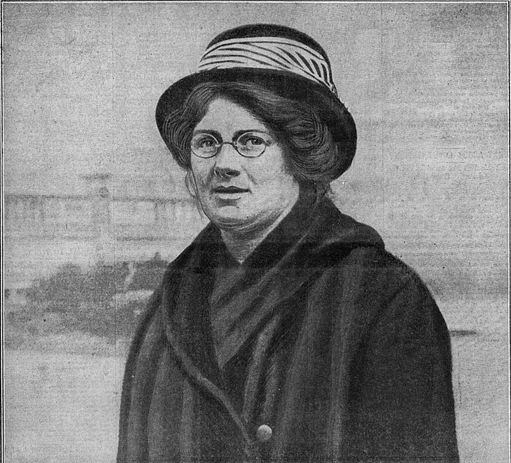
Caroline Beatrice Thornhill was born on October 19, 1879, in Holborn, London. She was the oldest of ten children born to shoemaker Edwin John Thornhill and his wife, Caroline Watkins. The family lived in Scotland in 1881. By 1891, they had returned to England and were living in Leicester.
Only a few weeks after they met, they got married on January 17, 1898, at St Matthew’s in Leicester. Her father did not approve of how quickly things moved, so her family did not attend the wedding.
When the bakery failed after six months, Caroline went to stay with a cousin in Nottingham. Even though they were apart, "Mr Love" kept after her and eventually talked her into travelling with him.
He took her around London and took advantage of her being separated from her family. If she resisted, he used violence. He forced her to do domestic work and wrote fake references, pretending to be her old employer. He would sometimes do nothing while she stole from her employers, or she let him into the properties to steal.
They travelled along the South Coast, and he found her jobs in towns like Brighton, Hove, and Hastings. While they moved around, she used different names, such as Mary Bright, Mary Stone, and Alice Lee.
On October 25, 1899, while living in Hastings, she appeared in court at the Hastings Quarter Sessions, charged with stealing crockery and cutlery from her employer, Henry Maldon Burrows, on August 17. She was sentenced to three months of hard labour.
On November 27, 1899, while serving her sentence at Lewes prison, she was brought to court again, this time at the North London police court.
Mr Marshall, a retired master mariner from Cazenove Road in Stoke Newington, recognised her as his former servant. She had started working for him on July 8 and left suddenly on July 11, taking a cashbox, a gold watch, a silver watch, and other items worth £28. She claimed her violent husband was to blame. Still, she got another three-month prison sentence at Hove Petty Sessions.
Her legal troubles continued in December. On December 11 and 12, she faced more charges for theft and receiving stolen goods from several employers in London. Scotland Yard said that since June 1898, Caroline had stolen £390, most of which was recovered from pawnbrokers after she told the police where to look.
During the investigation, she told the police everything she knew about George. In court, she made this statement:
"He is now living with another woman and teaching her to steal, just as he did with me. Before me, he taught two other women to steal.''
The judge postponed Caroline's sentence until she finished her current prison term, which ended in February. After that, she got another 12 months in prison.
The judge also said he hoped the police would find the man Caroline had named and he could be brought to justice too. During her time in court, Caroline cried bitterly over her situation.
As the authorities closed in, George managed to evade law enforcement and returned to London.
After she was released, Caroline stayed with her aunt in London and happened to see George on Oxford Street. She reported him to the police for larceny, which led to his arrest in London on November 11, 1900, on charges brought by his wife. He was then taken to Hastings, and Caroline watched his sentencing on January 9, 1901, just two days before his twenty-ninth birthday. His fingerprints on a stolen plate and her testimony were key evidence. He was sentenced to two years of hard labour for receiving stolen goods.
During the investigation, police said George was connected to dangerous people who carried guns around the city. Letters found on him also showed he was involved with three domestic servants, using them just as he had used his wife.
After going back to her parents in Leicester, where her father was ill and staying at the Leicester Infirmary, Caroline tried to move on. But she was afraid George would come after her for testifying against him. Her fears came true after he got out of prison on October 10, 1902, and went to Leicester in search of "Mrs Love." Her brothers reportedly made him leave, and Caroline later fled to Canada, which was encouraging immigration at the time.

In early 1908, using the name George Love, he got a low-level job at a West End club, but he was soon dismissed for not doing the work well.
George went to Brighton, and there he met Florence Wilson, a widow from Worthing. They met on a sunny day while she was sitting on a bench. He later visited her in Worthing, where she worked in an art needlework shop, and stayed with her. After three weeks, he proposed. On July 3, 1908, they took a train to London, planning to get married and start an antiques business. George convinced Florence to withdraw £30 from her savings at the Camden Town Post Office. He then abandoned her during the Franco-British Expedition in Camden Town. He said he was going to buy a newspaper, but instead he went back to the hotel, stole her belongings, and went to Victoria station with her £30 and anything else he could sell from her things.
He moved to Bristol and opened a small second-hand furniture shop at 389 Gloucester Road. Next door, at 388, lived 29-year-old Edith Mabel Pegler.
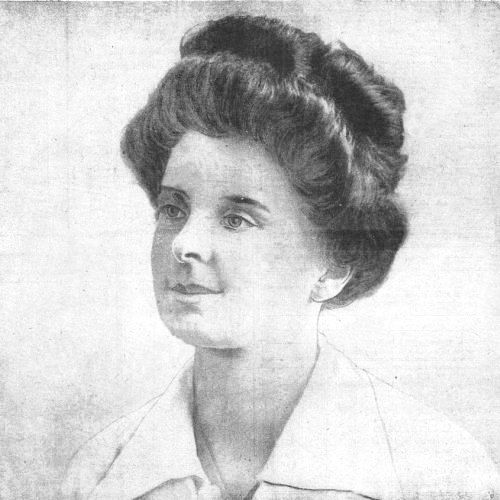
Edith was the oldest of eleven children. Her father, Frederick William John Pegler, worked as a yardman-groom for a cab company, and her mother was Adela Emma Wreyford.
On July 1, 1908, Edith placed an ad seeking a housekeeping position. George answered her ad. She quickly agreed to work for him, even though he couldn't really afford a servant. After just a week, Edith fell for him and agreed to be his partner, even though his financial situation was unclear. He claimed he got money from a made-up aunt and that he travelled the country as a dealer.
They were married at St. Peter's Registry Office in Bristol on July 30, 1908, with a special license. For the first time, Smith used his real name, saying he was thirty-three, a bachelor, and a general dealer. He listed his father, George Smith, as a deceased figure artist.
Edith's father died in 1909. She stayed with her mother and looked after the shop, while George came and went from her life. He told her he was away buying and selling in the UK and abroad, including Canada. (It's unclear if this was true or if he was still looking for Caroline.) Sometimes, he took Edith to different places in England. She was naive to his true nature or his past.
During his travels, he went to Southampton, Hampshire, and used the name George Rose. There, he met 37-year-old Sarah Annie Faulkner. Her father had a good job with the South Western Railway and died in 1907, leaving her his assets. After that, she moved to Southampton and rented some apartments on Bridge Road, near the dock station.
One evening, George, using the name Mr Rose, visited her lodgings to see the landlady. He met Sarah by chance and found out she had significant savings. He told her he wanted to marry her. Sarah told the landlady, ''I don't think I like him, though, and I wish you would tell him so"
Next time he called, the landlady bluntly told him, " Miss Faulkner doesn't want anything to do with you.”
George replied, “Ma'am, when a third person interferes, they make an awful lot of mischief''
Even though her friends warned her, Sarah eventually gave in to his charm. His stories about himself did not convince anyone. He claimed to be an antiques dealer and said he owned land in Canada. He also said his only living relative was a sister in Rome. One of her friends said he was ''the queerest sort of lover one could imagine. He never bought her flowers or chocolates or took her to a place of amusement. Yet, he showed a feverish haste for the wedding.’’
He didn't like Sarah spending any money. He made her quit her job the week before their wedding and wouldn't let her buy a new hat for the ceremony. She ended up getting married in her everyday clothes.
On Friday, October 29, 1909, they took a taxi with two witnesses, including Sarah’s friend Miss Thatcher, and went to the Register Office in Southampton. After the ceremony, they went back to Bridge Road, where the landlady had prepared cake and wine to celebrate.
About fifteen minutes before the newlyweds left Bridge Road to catch a train to London, two unusual things happened in the house.
1. George always said he didn't drink and usually had cocoa with his supper at Wilton Avenue. But on his wedding day, someone walked in and unexpectedly saw him drinking port wine from the decanter. He then quickly hurried off to help his new wife with her luggage.
2. He found out that Sarah was leaving a pile of old clothes behind for anyone in the house who wanted them. Upset by this, he had the trunks opened and packed the clothes back into them.
Sarah got ready to leave with a large wardrobe. Her things filled three or four boxes, while George had none.
The newlyweds then left for Clapham, London, to live. George claimed he’d set up his Antiques business there. He asked Sarah to withdraw £300 from her bank account to help the business. She obliged.
Sarah soon realised he was not a kind husband. He scared her with his violent behaviour. Once, he pushed her into the street and nearly caused her to be hit by a passing vehicle. On November 5, while they were at a picture gallery in Kensington, London, George asked Sarah to excuse him for 20 minutes while she looked at a painting. When he didn't return, Sarah grew tired of waiting and spoke to an attendant. The man quickly understood what was going on and asked, "How long have you been married?" ''A week,'' Sarah replied, looking upset. ''Then rush back to your lodgings,'' he said. ''We have heard of these cases before.''
Sarah rushed back to their lodgings, but she was too late. George had already returned, stolen her clothes, jewellery, and the rest of her money, and then disappeared for good.
With only the clothes she was wearing, Sarah went to her sister in London. Later, she returned to Southampton, moved back into her old lodgings, and got her job back.
George went to Southend and bought a house. He wrote to Edith, asking her to join him there.
After moving around for a while, George ran out of money. He left Edith, saying he was going to sell the Southend property, and started looking for more money.
While in Clifton, Bristol, George met Beatrice Constance Annie Mundy.

She was the daughter of George Bailey Munday, a bank manager, and Elizabeth Ellen Munday. Both her parents had died, and at thirty-three, she lived on her own money. After her father's death, her relatives encouraged her to set up a trust for the property she inherited. Her fortune was about £2,500 in secure investments. Smith quickly gained Miss Mundy's trust and affection, and they got engaged just a few days after meeting.
Shortly after their engagement, on August 22, 1910, George and Miss Mundy arrived at 14 Rodwell Avenue in Weymouth. Four days later, they married at the registry office. George used the name Henry Williams, claiming to be a thirty-five-year-old bachelor and picture restorer, and said his father was Henry John Williams, a commercial traveller.
After they got married, George found out his new wife received £8 a month from her trustees and was owed about £138 for emergencies. On their wedding day, he asked Mr Wilkinson, a solicitor in Weymouth, to contact Mr Footing, the Mundy family solicitor in Warminster, for a copy of her late father's will. He learned that most of the property was protected by a settlement, but he still managed to get the £138 and worked hard to claim it. By September 13, he had taken all the money in gold. That day, he disappeared, leaving Beatrice with almost nothing and hardly any clothes. He sent her a cruel letter, accusing her of giving him an STD.
He returned to Edith Pegler and arranged to pay off his debt to the Equitable from Ashley Down Road, Bristol and on September 21, he visited the office and paid off the £93 mortgage.
To explain his time away in Weymouth, he told Edith he had "been to London and around the country." They did not stay long in Bristol and soon moved to Glenmore Road, Southend-on-Sea, likely to avoid Beatrice Munday. There, they rented a place and opened a small shop selling antiques and general goods. After about four months, they moved to Barking Road in Walthamstow, then back to Bristol, with Smith running similar antique businesses in each location. In early 1912, they settled again in Bristol at Bath Road, Brislington.
For seven weeks, George and Edith lived together, but then he became restless again. He told her he was going to London and other business places. He left her with little money to run the small shop while he was away for five months, only writing to her a few times from the Woolwich Equitable Society's address. During this time, Smith barely supported Edith, sending her just £2 in five months, and the business struggled. Eventually, Edith sold the shop for about £5 and went back to her mother.
In March 1912, George travelled to Weston-super-Mare. By chance, Beatrice Mundy had been staying there since February 2 at the Norwood boarding house, run by Mrs Tuckett.
On March 14, Miss Mundy left around eleven to buy flowers for Mrs Tuckett, who expected her back in half an hour. Instead, she returned at one and said she had seen her husband looking out over the sea as soon as she left. She was very excited. At three o’clock, he arrived at the house, and Mrs Tuckett, like others, took a dislike to him.
Afterwards, "Mr Williams" tried to contact his wife's family, hoping to appear reconciled and get more money. He took Beatrice, who seemed passive, to see Mr Lillington at Baker & Co., solicitors on Waterloo Street. They visited on the same day as their supposed chance meeting. In front of his wife, Mr Williams gave a false account of how he had left with her money in August 1910. He also claimed to have “borrowed” £150 from her to repay a loan. On the solicitor’s advice, he gave her a note for that amount with 4 per cent interest, and Mr Lillington wrote the letter as instructed. Mr Lillington noticed that Mr Williams did all the talking while Beatrice agreed with everything. He asked her directly if her husband’s statements were true, and she confirmed each one. Mr Lillington strongly advised her to send the promissory note to her uncle, but Mr Williams prevented her from doing so. Mr Lillington saw them for the last time on March 16.
The couple left Weston-super-Mare and stayed in different towns. By late May 1912, they settled at 80 High Street in Herne Bay, Kent. George started working as an 'art dealer'. On July 8, 1912, Beatrice wrote a will at George’s request, making him her only beneficiary.
On July 10, George bought a cast-iron bath for their place.
He took Beatrice to a doctor to talk about her 'fits.' He said she had memory loss and so didn't remember having them. The doctor gave her some medicine.
On July 13, 1912, Beatrice drowned in the bath at 80 High Street, Herne Bay, Kent. At the inquest, George said he had gone for a walk and found her dead in the bath when he came back. He told them about her fits. The jury ruled her death as 'Death by misadventure.'
Miss Mundy’s brother wrote to the coroner, requesting a thorough investigation. However, there was no post-mortem, and no one who knew Smith or Beatrice, except the doctor, was called to give evidence.
George inherited her assets, which totalled £2,579 13s 7d.
After Beatrice's death, George went back to Edith and told her his made-up stories about his travels and trading.
At the end of September 1913, George travelled south again and met 25-year-old Alice Burham from Aston Clinton, Buckinghamshire.
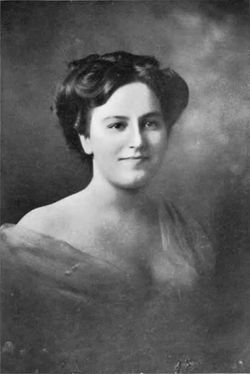
She was the daughter of Charles Gates Burham, a fruit farmer, and Elizabeth Menday.
Here is Alice's story of her efforts to support herself and live independently:
Alice had attended the village school, owned by the Rothschild family, and later became an infant school teacher. She was active in her local Baptist church, where she also taught Sunday school.
Her warm personality and lively spirit made her well-liked by everyone she met.
But Alice wanted more than to be a village schoolteacher. She had bigger ambitions.
She enrolled at the pupil teacher centre in Aylesbury, worked hard, and passed two exams, though she didn't pass the third. After that, she worked as a nursery governess, but later decided to become a nurse. After two years of training at Hitchin General Hospital, she found nursing suited her well. When she finished, she took a private job in Southsea with a retired banker, earning a good salary and saving a lot.
While living in Southsea, Alice met Smith at the Wesleyan Chapel. She later wrote to her father, "I could constantly see his eyes fixed upon me." She described how he followed her from the chapel and introduced himself.
He said he was a bachelor with independent means. After only a few weeks, George proposed on October 15, and they married on November 4.
In a letter to her sister, she wrote:
''I have had a proposal from an exceedingly nice gentleman, George J. Smith. We have known each other for some time now and met at the church I attend. George was brought up Wesleyan. George is 40 years of age but doesn't look it. When George proposed to me, he brought his bank book and private papers to show me that he could afford to keep a wife comfortable without business. His idea is for us to have a nice villa in the country. As he says, it will be our own fault if we don’t realise all the happiness we are now looking forward to. We shall be married at Aston Clinton Church. He has travelled a good deal and was brought up in Scotland, where we may go for our honeymoon. I am so happy, Rose dear. My heart and soul thank God continually for joining me to the love of so good a man, a perfect gentleman, very homely. You cannot fail to like him—so genuine, kind, etc. I am the most fortunate and happiest girl in the world.
By November 20, he had convinced her to transfer her money to him. After that, a will and a life insurance policy were set up in his favour.
When they arrived in Blackpool on Wednesday, December 10, Alice soon complained of a headache, blaming the long train ride. Dr Billing examined her and gave her medicine, and she seemed to get better. By Friday evening, she complained of pain again, but after a short walk, said she felt better. When they got back to their rooms, she said she would take a bath. Sadly, she never came out alive.
During the inquest that followed, George stated he had known his wife for about three months. He told the gathering that in March, she had had a heart operation for peritonitis, but otherwise was healthy. According to his account, after she entered the bathroom, he called out to remind her to turn off the lights. When she did not answer, he went in and found her underwater. He lifted her head and called for help, but she was already dead. Dr Billing concluded her heart had failed, leading to unconsciousness and drowning. The jury rendered a verdict of 'Accidental drowning.'
After her death, Alice had a pauper's funeral, and even those who attended had to pay for their own tram fares. Trying to save a few shillings on a room, George offered to spend the night after her death in the same room as her body.
Later, on December 29 in London, her probate was granted to George Joseph Smith, who was listed as a gentleman. Her estate was valued at £604. He also got the £500 life insurance policy he had taken out on her, as well as £100 from her estate while she was alive.
Soon thereafter, Smith's next fraud victim was 42-year-old Alice Reavil, a domestic servant born on October 30, 1871, in Sheerness, Kent.
The daughter of James Reavil, a soldier, and Margaret Maria Reavil, Alice met George in Bournemouth during a holiday from Plumstead, London. He used the name Charles Oliver James and claimed to be a gentleman of private means. After only three or four days, he asked Alice to marry him and suggested they open an antique shop in London. They married on September 15, 1914, in Woolwich, London. George persuaded Alice to sell her property and some belongings to help pay for the shop, so she sold them for £14, and they moved into Battersea Rise, Clapham, London. She also received £76 4s from the Post Office in Lavender Hill and gave nearly all of it to him. Two days later, on September 22, while riding a tram to Brockwell Park in Herne Hill, he talked about going to Halifax, Nova Scotia. At the park, he told Alice, 'I'll not be many minutes, just wait here.' She never saw him again.
He had returned to Edith in Bristol with Alice's money, once again making up stories about how he had earned it during his travels and business ventures.
In early December 1914, George pretended to be a land agent named John Lloyd when he met his next victim, Margaret Elizabeth Lofty in Bristol.

Margaret was the daughter of Rev Fitzroy Fuller Lofty and Elizabeth Sarah Philips. She was born in 1876 in Monk Sherborne, Basingstoke, and moved to Bristol with her family by age 15. After her father died in 1892, she lived off her own means. George saw her as another ideal target.
They quickly fell into a whirlwind romance. One day, Margaret just left home, travelled to Bath, and married George on December 17. George had planned. On their wedding day, he took out a £700 life insurance policy on her, and she changed her will to benefit him. She had no idea what was coming.
After the wedding, they went from Bath to London and checked in at 14 Bismarck Road, Highgate Hill, to start their honeymoon. George later said that Margaret complained of a headache and dizziness, so he took her to a doctor, who prescribed medicine. On the morning of December 18, she said she felt better and went shopping. She was cheerful during the day, but that evening, after taking a bath, George found her dead, just as he had before.
At the inquest, George said that about 15 minutes after Margaret went to take a bath, he left and came back at 8:15, expecting to find her in the sitting room. When she wasn't there, he asked the landlady, and together they went to the bathroom on the first floor. The room was dark, so he lit the gas and found Margaret unconscious in the bath, which was about three-quarters full. The landlady helped him pull her out, but she showed no signs of life, so he called the police and a doctor. Dr Bates said she died from asphyxia due to drowning. He suggested that influenza and a hot bath might have caused her to faint. The inquiry was postponed so the landlady, who had reportedly had an accident, could attend. The jury later decided it was an 'Accidental Death.'
Probate was finalised on January 11, 1915, and John Lloyd, the land agent, received £705.
He believed he had gotten away with another murder.
A funeral was held for his third murdered 'wife,' and George expected to receive both her inheritance and life insurance money.
But time was running out for George. The inquest was reported in national newspapers, and one man noticed the story was almost identical to his own daughter's death. He contacted the police, and an investigation began.
The Metropolitan Police received letters from Alice Burnham’s father, Charles, and from Joseph Crossley, both raising suspicions about the women’s deaths.
On February 1, 1915, soon after the investigation started, George was arrested as he left a solicitor’s office in London, where he was trying to arrange to receive money from Margaret’s death.
On February 2, he was charged with ‘causing a forged entry to be inserted in the Marriage Register at Bath, by describing himself as John Lloyd, when he was married to Margaret Elizabeth Lofty '.
He appeared in court at Bow Street on fraud charges and was held in custody until February 15.
Detective Inspector Arthur Neil led the investigation, and the bodies of George’s three wives were exhumed and examined by Dr Bernard Spilsbury.
George admitted that Miss Annia Burnham had died in similar circumstances in Blackpool, six weeks after their marriage.
The truth finally came out. Investigators connected the cases and discovered that George had killed three women in the same way. The case became known as the ‘Brides in the Bath murders.’ It was also revealed that he was a fraud and a bigamist, as he was already married to another woman when these marriages happened.
Evidence in the fraud case showed that George had entered into three more marriages.
He married in Leicester in 1898 under the name “Love.”
In Weymouth in 1910 as “Williams,”
and in Woolwich in September 1914 as “James.”
After the investigation, while George was still in custody on March 23, 1915, at Bow Street in London, he was charged with murdering three wives: Bessie, Alice, and Margaret.
Chief Magistrate John Dickinson heard the case because Mr Hopkins, the previous magistrate, was ill.
Mr A. H. Bodkin led for the Director of Public Prosecutions, with Montague Spearman defending, instructed by Mr W. P. Davies.
When the defendant entered the dock.

Mr Bodkin began:
''The defendant is charged with the murder of three women—Beatrice Constance Annie Munday on July 13, 1912; Alice Burnham on December 12, 1913; and Margaret Elizabeth Lofty on December 18, 1914.''
The suggested motive was money.
The crimes were committed boldly, each driven by clear greed for wealth. Evidence shows that after the deaths of two victims, about £2,800 was gained, and at the time of George's arrest, he was seeking another £700.
It was found that George left his wife, Edith Peglar, for periods to commit these crimes, and it came out that he had first married in 1898 to Caroline Beatrice Thornhill.
A notable aspect is George's repeated behaviour: each relationship began secretly and with false affection, followed by a bigamous marriage, persuading the woman to make him sole heir and take out life insurance, then her death by drowning in the bath, which he discovered each time.
After each death, George sent letters to relatives, arranged a pauper's funeral to retain funds, and disappeared without contacting the family again.
After getting money from the first two marriages and trying to do so after the third, Smith returned to Edith Peglar.
Mr Bodkin then began to describe the defendant's background:
George Joseph Smith, son of George Thomas Smith, was born in 1872. He married Caroline Beatrice Thornhill in Leicester in 1898, under the name George Oliver Love. She was alive and is now returning from Canada.
In 1908, five years after he last saw his real wife, George Joseph Smith met Edith Mabel Pegler in Bristol. Most of the events in this case occurred in the West Country. After a short acquaintance, Smith married her on July 30, 1908, using his real name, George Joseph Smith. In Bristol, where they lived, he worked as a second-hand furniture dealer. Bodkin explained that Smith and Miss Pegler moved from place to place, never staying long in one town. They lived in Bristol, Luton, Bath, and Croydon, working as furniture or antique dealers. In August or September 1910, they returned to Bristol. At one point, Smith left Miss Pegler and wrote to her, saying he was in Weymouth.
First victim: The Bank Manager’s Daughter.
Weymouth first introduced the name of Beatrice Constance Annie Mundy. She was a single woman in her early 30s. On August 25, 1910, in Weymouth, the defendant, using the name Harry Williams, married her. She lived until July 13, 1912, when she died at Herne Bay. She was the daughter of the late Mr Mundy, a bank manager in Wiltshire. Her mother was also dead. She had an uncle and a brother who were alive. The uncle lived in Trowbridge. Her father left his property to his son and Beatrice. Her share was invested in various stocks and shares. Her uncle and brother managed the property. It was clear from their statements and other evidence that she was not very capable with money. The property was worth about £2,500. Because she was not business-minded, she voluntarily settled all her property on November 8, 1905, with her uncle and brother as trustees. Mr Bodkin said her income was about £100 a year, paid to her monthly in a single sum. This allowed some of the trust fund to accumulate in the trustees' hands. She did not live at home in Wiltshire but led a solitary life. She stayed alone in boarding and lodging houses.
In August 1910, without warning her relatives or hinting at her plans, she sent a letter to her uncle on August 25. This was followed by a letter from the defendant announcing her marriage.
Miss Mundy was staying in Weymouth at this time. She and the defendant arrived on August 22 and took three rooms, each with a separate room, until they were married. The defendant was known as Mr Williams, and she as Miss Mundy. She had almost no luggage, just a hatbox. They said they planned to get married. Within three days of the marriage, the defendant wrote to her uncle, asking that all of Bessie's money be sent to him.
Beatrice Munday added a postscript: ''Kind regards, I am very happy, indeed.”
On August 31, 1910, Miss Mundy sent a letter requesting money, and a small amount was sent to her. Soon after, a law firm in Weymouth, Messrs. Andrews, Barrett, and Wilkinson, acting for George, contacted her uncle and his solicitors. This led to the settlement, a list of investments, and other trust papers being sent to George in early September 1910. Mr Wilkinson, who received these documents, was visited by George and Miss Mundy. They tried to release the settled funds or get a loan using them as security. When Mr Wilkinson questioned George about his position, George sensed that Mr Wilkinson was not friendly. A few days later, they changed solicitors to Mr Eaton, also in Weymouth. Around September 8 or 9, George found papers sent to Miss Mundy. These showed that about £120 of her money had built up with the trustees. He told Mr Eaton to get the money. On September 13, a cheque for 2s. 4d., representing the balance, was sent to Mr Eaton.
On the same day, the defendant and Miss Mundy went to Mr Eaton. When they learned the cheque had arrived, the defendant wanted it cashed immediately. Mr Eaton suggested waiting until it cleared, but the defendant insisted. Mr Eaton, trusting the cheque, wrote his own cheque for about £130, less costs, and sent it to his bank in Weymouth. At the defendant’s request, it was cashed in gold and given to Miss Mundy, who gave a receipt. Miss Mundy took little part in these arrangements. The defendant did most of the talking. That day, the defendant asked Mrs Crabb if the postman had been and if there were any letters.
When told there were none, he said, "My wife is expecting a cheque, and we owe you some weeks’ lodging expenses. I have nothing. It is my wife who has it, and she is expecting a cheque." They went out around nine o’clock. Soon after, a telegram arrived for the defendant. It was likely sent by himself.
At eleven o’clock, he returned and asked for the telegram. After reading it, he said he had to go to London on important business. He told Mrs Crabb, "If I am not home tonight, I will come home on Monday." He took his handbag and told Mrs Crabb, "My wife will receive a cheque and will pay." He then left. Mrs Crabb or his wife did not see him for 18 months, and he took £130 in gold with him. Around one o’clock, Miss Mundy returned and was very upset to hear her husband had gone. Two letters he left behind were given to her. One said, "I do not know how long I shall be away." The other, also addressed to his wife, was not read in full by counsel. Mr Bodkin said, "It contains a cruel and absolutely untrue and foul statement regarding this poor woman."
The defendant wrote: “The best thing for you to tell the landlady and everyone else is that I have gone to France, your uncle may not even know we are parted unless he happens to visit you, and you must keep him away. If he asks you about the money, tell him you kept it in a leather bag. Two days after I had gone away, you went for a walk on the beach and fell asleep, and when you awoke, your bag was gone. If you do not do this, it will be very awkward for you. When you have read this letter, take it into the street and tear it up.”
Then the defendant asked his wife to request her uncle, in about a week, to send her money orders. This way, she could cash them at the Post Office, pay the landlady, and put some of each £8 she received into the Post Office Savings Bank in case of emergency. He added that if she did not do this, he would be angry when he returned.
"The poor woman was very distressed, naturally, at the accusation made against her in the earlier part of that letter," continued Mr Bodkin.
Her brother found her with almost no suitable clothing. She was completely penniless. He took her to his home in Poole, where she stayed for a short time until she recovered.
On September 14, 1910, from an address on Ashley Down Road, Bristol, after leaving Weymouth, the defendant wrote to the Woolwich Equitable Building Society. He asked how much he owed on a loan for building a house in Southend. While the letter was on its way, he was in Bristol with Miss Peglar. The reply from Woolwich said he owed about £93. The defendant and Miss Pegler left Bristol and went to Woolwich, where he paid £93 6s 7d in coins, the exact amount owed, and cleared the mortgage on the house.
After her stay in Poole, Miss Mundy returned to her solitary life, moving from one boarding house to another.
In March 1912, she was living in a boarding house at Weston-super-Mare, not far from Bristol, and met the defendant again on March 14.
"Nothing," continued Mr Bodkin, "shows his power and influence over her more than how quickly she forgave him. She forgot the accusation in the letter, her desertion, and the theft of her money. She was once again devoted to him as her loving husband."
Three days after they met again, on March 17, the defendant wrote a letter to her uncle expressing regret for the past and promising to be a loyal and dutiful husband in the future, hoping to earn the appreciation of her husband and his family. At the end of the letter, Miss Mundy wrote, ''I know my husband now better than ever I knew him.-Yours, with love, Bessie.”
The defendant and Miss Mundy went to Woolwich and later to High Street in Herne Bay. His house was small and available for rent, and in May 1912, the defendant spoke with a representative of the owner. He said only he and his wife would live there, that he dabbled in paints and antiques, but his wife had a private income and was a step above him; he had little, but she was the daughter of a bank manager. He said he wanted to settle down and showed a Post Office savings book with about £50 in it. He took the house on a monthly lease, refusing a longer term. Money was requested from Miss Mundy's uncle and sent to her; the last amount was £33 on June 22, 1912. Two days later, the defendant opened an account at the Herne Bay branch of Parr’s Bank with £38.
While waiting for the money to arrive on June 22, the defendant and Miss Mundy visited Mr Annesley, a solicitor in Herne Bay.
"The defendant realised," continued Mr Bodkin, "that if he wanted to get this woman’s property, she would have to make a will in his favour and then die. So Mr Annesley prepared mutual wills: one for Miss Mundy leaving everything to him, and one for him leaving everything to her."
While these draft wills were being prepared, on July 4, the defendant in Herne Bay bought a bath for 17s. 6d.

Mr Bodkin said the bath’s dimensions were very important and described them in detail. The bath had fittings, and water had to be carried to it by hand. It was delivered on July 5.
Miss Mundy signed her will on the 8th, leaving everything to the defendant.
On July 13, the defendant and his wife visited Dr French, who lived nearby. The defendant, who did most of the talking, said, “My wife had a fit yesterday.” The doctor asked what it was like, and the defendant replied, “She opened and shut her mouth, and she had spasmodic contractions of her arms and legs.” The doctor asked Miss Mundy if she had any history of fits, and she replied, “I never had any in my life before, or know of any in the family.” The doctor examined her, found no evidence of fits, prescribed a mild sedative, and they left.
On July 12, the defendant went to Dr French again and said, “My wife has just had another fit.” The doctor visited her but found no evidence of a fit.
The next morning, Saturday at eight o’clock, the defendant went to Dr French with a note saying, “Do come at once; I am afraid my wife is dead.” Dr French found her in the bath with her head submerged; the bath was filled with warm water, and she was dead. Counsel pointed out that the bath was three-quarters full, holding 41 gallons of water. For a woman suffering from fits, it would have taken several trips to fill the bath. Counsel argued that the story of her head being under the water was hard to believe unless it was forced, perhaps by raising the legs, which would cause the head and shoulders to slide down the sloped end of the bath.
There is something remarkable in all three cases. Each woman went to take a bath, undressed, and left the door unfastened. In every case, even though two of the women were in unfamiliar houses, they left the bathroom door open before their fatal bath. It seems unlikely that three wives, in three different houses, would all die in the bath with the door unfastened by accident.
After the discovery, the defendant sent a telegram to her uncle that said: Bessie died in a fit this morning. Letter follows. A similar letter was sent to Miss Mundy’s brother, the co-trustee. In addition to replying to the defendant, he also wrote to the coroner.
The story then moves to Blackpool, where the second victim, Alice Burnham, also known as Mrs Smith, died.
Mrs Crossley, the elderly landlady of the Company House where the tragedy happened, had just started her testimony when Smith interrupted. He shouted, "More bribery," and then complained to the magistrates that a detective officer had been grinning at him all morning.
Mrs Crossley's son also upset Smith. He claimed that during the funeral arrangements, Smith insisted on a cheap coffin and a common grave, saying he would not return to Blackpool and that "when they were dead, they were done with."
When he heard this, Smith put down his writing pad and said, "It is no use taking notes on lies like that; only a cannibal would talk like that, not a human being."
Evidence was provided that George Joseph Smith went through marriage ceremonies with six different women.
Dr B. H. Spilsbury and Dr Willcox, the Home Office pathologists, had made expert examinations of the three exhumed bodies of the victims and gave evidence of the result of those examinations at Bow Street Police Court. Spilsbury's approach to forensic pathology in this case, particularly his careful autopsy methods and attention to subtle details such as the position of bodies and bruising, was considered groundbreaking at the time. His analytical style set new standards for evidence evaluation in suspicious deaths, helping to establish forensic pathology as a crucial tool in criminal investigations and influencing later practices in criminology.
Dr Spilsbury, a pathologist at St. Mary's Hospital, described first the examination in the case of Miss Mundy's body, which he saw after exhumation at Herne Bay.

The body, he said, was that of a well-nourished and well-proportioned woman in an advanced state of decomposition. There was a condition known as "goose-skin" on part of the body. That occurs in cases of sudden death, sometimes, but not always, from drowning. He found no evidence of bruising, but if there had been, it would have disappeared during decomposition. The body was too far decomposed for him to form an opinion as to whether Miss Mundy was a healthy woman.
Next, he discussed Miss Burnham's body. On February 10th, he went to Blackpool and examined a recently exhumed body, said to be Alice Burnham. In this case, too, the body was in a state of advanced decomposition, and he found no evidence of bruising. There was a slight thickening of the mitral valve of the heart. The arteries appeared to be healthy. Various factors, such as wear and tear of life or valve inflammation, caused thickening of the mitral valve. It was not in this case serious, and would not, he thought, have any effect on either the general health or the ordinary pursuits of the deceased. Extensive thickening of the valve would cause shortness of breath, swelling of the feet, and a disinclination to lead a very active life. Where the disease of the valve was caused by rheumatic fever, it would tend to remain at the same extent as the illness had caused and not to increase, unless the illness had been very severe. It was a very common condition.
Mr Bodkin for the prosecution: "Would a person having a mitral valve thickened as Alice Burnham's was be rendered liable to fainting or sudden collapse?"
Dr Spilsbury: "No, I think not," adding that in this case the disease was not in any way a serious matter.
On March 4th, he went to Finchley Cemetery and saw the body of Margaret Lofty.
Mr Bodkin: "Did you find any appearances on the left arm?"
Dr Spilsbury: "Yes, there was a small recent bruise on the back of the left elbow, and there were two other recent bruises under the skin at a slightly higher level at the back of the elbow. I thought these bruises had been inflicted certainly within twenty-four hours of death, and they might have been within four or five hours. The largest of them was only one inch across.”
Mr Bodkin: "Did you form any opinion as to whether the same force had caused all three, or whether they were separately received?"
Dr Spilsbury: "I think separately."
Dr Spilsbury said he had seen in court the three baths, which were exhibited in the court, and he had read the description by Dr French of the position of Miss Mundy's body when he came into the house at Herne Bay.
Mr Bodkin referred to the statement made to Dr French that Miss Mundy had had an epileptic fit,
Dr Spilsbury: ''The first effect of the onset of such a fit was to cause a stiffening of the muscles, which was followed when the fit was passing off by relaxation of the muscles. If Miss Mundy had had a fit in the bath, in view of her height and the length of the bath, it would be impossible for her head to be submerged. The feet were in such a case extended, and they would come in contact with the end of the bath, and would in that way cause the head to be pushed out of the water''.
Mr Bodkin: ''Do you think that the lifting of the legs out of the water in that way would enable the trunk to slide down sufficiently for the head to be immersed?''—
Dr Spilsbury: ''Yes.”
Mr Bodkin: ''What would be the result of the sudden immersion of a person's head?''
Dr Spilsbury: “It would give rise to severe shock, leading, perhaps, to unconsciousness from the rush of water up the nose."
Mr Bodkin: ''How soon after immersion would unconsciousness supervene?''
Dr Spilsbury: ''In some cases immediately, or within a few seconds, up to about a minute''
Answering further questions by Mr Bodkin, the witness said that five minutes was the outside limit within which death from drowning would occur. The loss of consciousness would likely be much more rapid in the event of sudden, unexpected immersion. The sudden immersion of a person suffering from severe heart disease might be sufficient to cause death from shock.
Dr Spilsbury was next questioned concerning Miss Burnham, whose body was found in a bath at Blackpool, with the feet towards the sloping end and the head at the narrow end. The witness said that, in view of the bulk of Miss Burnham's body, it would not have been possible for her to take a bath in that position. The width of the bath at the narrow end was one foot, and her body would be very tightly wedged at that end. If Miss Burnham had fainted while taking her bath, he did not think that her head would have become submerged, unless she had fallen from a standing or kneeling position. But even then, it would have been very difficult, and he should have expected her to be found face downwards.
Dealing next with the case of Miss Lofty, who was found in a bath at Highgate, Dr Spilsbury said that he found nothing in the condition which would explain a sudden attack of faintness. The bruising of her left arm, which had already been described, might have been caused by her striking her arm on the wooden casing of the bath during her struggles. The witness mentioned that there was only room on the left side of the bath for a person to stand.
Mr Bodkin: ''And it was the woman's left arm that was bruised?''
Dr Spilsbury: ''Yes.”
Mr Shearman said he would not cross-examine Dr Spilsbury at this stage, because if the case went to trial, it would be better to consider the medical evidence as a whole.
Dr William Henry Willcox, physician to St. Mary's Hospital and senior official analyst to the Home Office, was then called. He stated that his conclusions as to the three women's deaths were in agreement with those of Dr Spilsbury.
Mr Bodkin asked for the committal of the prisoner for trial on the three charges of murder. He asked that the commitment warrants be issued in this order: to the London Central Criminal Court, the Maidstone Assizes, and the Lancaster Assizes.
Mr Shearman said he understood that no committal was asked for in respect of bigamy or any other charge than murder.
The magistrate agreed that that was so, and the prisoner, who reserved his defence, was committed for trial on the three charges.
On Thursday, 20 May 1915, in the King's Bench Division, Mr Bodkin applied on behalf of the Crown to have any indictments against George Joseph Smith from the Lancaster and Maidstone Assizes moved to the Central Criminal Court for trial. The application was made before Mr Justice Shearman and Mr Justice Sankey.
Smith was charged with murdering three women: one in Kent, one in Blackpool, and one in London. He was committed for trial under section 22 of the Indictable Offences Act, 1848, with charges to be heard at Maidstone Assizes, Lancaster Assizes, and the Central Criminal Court.
The evidence from each death was relevant to the trial of any of the cases.
Over 130 witnesses needed to be brought together for the trial, so it was more practical to handle all the charges in London.
At the time, many places to stay in the Assize towns were taken by the military because of the war.
No one opposed the application, so the Court granted the order.
He was put on trial for the murder of Beatrice, his first in 1912, before Justice Scrutton. The trial began on 22 June and continued through 26 June, then resumed on 28 June and concluded on 1 July.
Edith Pegler was among those who testified. It must have been difficult for her, knowing she had been married to a murderer.
She said Smith first hired her as a housekeeper while he ran an antique shop. After about a week, he asked her to marry him, and they wed on July 13, 1908. They lived at the shop for a while, then moved to Luton. Next, they lived in Croydon, still running an antique shop. Around June 1909, she left him in Southampton and went back to her mother in Bristol because he wanted to travel for business. Six weeks later, she rejoined him in Southend. He claimed he bought a picture for 7 shillings and 6 pence in Guildford and sold it in London for £250, using the money to buy a house in Southend. They stayed there for a few months, then returned briefly to Bristol, and then went back to Southend to continue their antiques business. In early 1911, they moved their furniture to London, then opened shops in Walthamstow and Bath, staying in Bath for a few months before moving to Bath Road, Brislington.
Mr Bodkin: ''While you were at this shop, did the prisoner stay with you?
Edith Pegler: ''After six or seven weeks, he said he was going about the country to do some dealing and to try and sell the house in Southend''
She continued:
In July 1912, Smith wrote asking Edith to meet him at Margate. He told her he'd been to Canada and sold a Chinese image in London for £1000. They stayed a week at Margate, then went to Tonbridge.
Mr Bodkin: “Did you have any knowledge that he had been living in Herne Bay?''
Edith Pegler: ''None whatever''
Mr Bodkin: ''Or that he had gone by the name of Williams?''
Edith Pegler: ''None whatever''
Mr Bodkin: ''Or that a woman named Mrs William had died there?''..
Edith Pegler: ''I knew nothing about that''
Mr Bodkin: ''Did you know that he had a banking account at Tunbridge Wells?''
Edith Pegler: ''No''
Mr Bodkin: ''You have mentioned a large number of places where you stayed with him in apartments. Do you remember him asking at these places whether they had bathrooms?''
Edith Pegler: ''No.”
Mr Bodkin: Does he take baths at these places himself?''
Edith Pegler: ''l remember once in Weston-Super-Mare
Mr Bodkin: ''Anywhere else?''
Edith Pegler: ''Yes, once at Bristol?''
Mr Bodkin: ''Did you ever have any conversations with him about baths? Did he ever mention the subject to you?''
Edith Pegler: ''In a conversation once, he told me not to have anything to do with baths; they were dangerous'. He said Women lost their lives having weak hearts, which caused fainting fits''
The evidence against him was so strong that the jury found him guilty after only 20 minutes of deliberation.
The other two murder charges were dropped because he had already received the death penalty for Bessie’s case.
George Joseph Smith was sent to Pentonville Prison while he waited for the result of his appeal.
At the same time, the Home Office was asked if, if the death sentence was confirmed, the execution could take place at Pentonville instead of Maidstone. The request mentioned earlier complaints that executions at Maidstone disturbed other inmates, which had led to a plan to move executions to Canterbury, though that plan was later cancelled. It was also argued that executions should happen in the county where the trial was held.
After these administrative issues were discussed, Smith’s appeal was filed and heard on 29 July 1915 at the Old Bailey in London.
During the appeal, Edward Marshall Hall KC and Mr Shearman argued that Smith was convicted only because of coincidences.
The Lord Chief Justice, Justice Darling, and Justice Lush presided over the case. The courtroom was packed with lawyers and members of the public, including many women. The Lord Chief Justice said there was no reason to allow the appeal, so it was dismissed.
George stood in the dock. When he heard the appeal was dismissed, he briefly held the rail, kept his head up, and showed less emotion than the women watching from above. He looked pitiful, knowing his death was certain.
After the appeal was dismissed, reports said that Smith’s cold attitude at Pentonville surprised even the experienced wardens.
The execution was set for Friday, 13 August at 8 am. Even though the trial was held outside Kent, the crime happened there, so the execution was scheduled for Maidstone. A week before, Smith was handed over to the Sheriff of Kent and taken to Maidstone. Instead of the usual condemned cell, he was placed in a cell in the old hospital, away from the other prisoners. He had his own large exercise yard, out of sight from others. The execution shed was only a short distance from his cell.
George spent much of his last days with Chaplain Joseph Stott. He insisted he was innocent, and the day before his execution, after Holy Communion, he wrote a letter to the Bishop. In the letter, he swore before God that he was innocent and asked the Bishop to share his final statement with the world.
His last letter, written to Miss Pegler, the woman to whom he always returned, was written from the condemned cell:
Maidstone Prison, August 9, 1915.
Dear Love,—Your pure heart and conscience free from stain help me to believe that whilst memory holds a seat within your sacred brow, you will remember me. You are the last person in the world to whom I shall write, since this is my last letter. I could write volumes of pathos prompted by the cruel position wherein I am now placed, but I do not have to do so because I have too much respect and love for your feelings. I have not asked for a reprieve, nor made a petition, and do not intend to do so.
Thus, since we have failed to obtain justice from the earthly judges, I prefer death rather than imprisonment. So an innocent man goes to his untimely end, a victim of cruel fate. God alone is my judge and the King of Kings. It was he who gave me life— who ordained our coming together.
My property, I give to you.
Don’t be alone on the last day, when I will have left this weary world behind, where perjury, malice, spite, vindictiveness, prejudice, and all other earthly troubles will have done their best and can harm me no more.
My time is occupied in solemn and deep meditation. I am preparing my soul to receive him. I return to the teaching which I received from my mother. I have gone to God, with all my sins, with true repentance, and asked his forgiveness and mercy on my soul.
I truly believe and feel that my faithful and sincere prayers have been answered. I shall have peace, perfect peace.
May an old age, serene and bright, and as lovely as a Lapland night, lead thee to thy grave. Now, my true love, Good-bye until we meet again.
Yours with immortal love,
GEORGE,
P.S.—I must say that the chaplain here is the best man I have ever met.
Smith also wrote to Mr Marshall Hall and Mr W. P. Davies, thanking them for defending him as his counsel and solicitor. In these letters, he continued to insist on his innocence.
Edith Pegler was seen in London the day before his execution. She appeared happy and well.
She said she had not replied to any of his letters. Even though he asked her to visit so they could speak one last time, she had no intention of doing so. She said, ''I don't want to see his face again. I am trying to forget that brute and all of the trouble he caused. He is not worth thinking about''
In his final days, George was often seen crying, and his mental health got worse. Edith had left him, and he had no friends. He seemed a sad figure compared to who he was before he was caught.
On the morning of his execution, George Joseph Smith, Prisoner no. 404, was asked the usual question: whether he wanted anything special to eat or drink. He made no special request and barely touched his breakfast.
Shortly before 8 a.m., Executioner Ellis, who had arrived the night before and slept at the prison, came into the cell and tied Smith's arms while the chaplain watched.
The chaplain led the way, saying the service for the dead. Smith was very quiet as he walked from his cell to the gallows, supported by warders on each side. He crossed part of the open prison yard, stepping into the sunshine of a summer morning.
A crowd gathered outside the prison, talking loudly as they waited to witness the execution from a distance. Since the execution shed was just over the wall, Smith and those with him likely heard the crowd as they walked to the scaffold. Many well-dressed women were in the crowd, and women could be seen watching from the windows of nearby cottages. Most of the men wore military uniforms.
There was no public protest, but people made comments like 'The wretch deserved his fate.' Another said, 'I wouldn't mind having to do that job this morning,' meaning the executioner, and someone else remarked, 'Never was there such a deep-eyed and callous murderer; hanging is too good for him.' Women had shown a lot of interest in him during the trial, with one saying, 'He is a brute. He may have suffered during his final days, but not half enough.' No one expressed sympathy for the condemned man.
Two policemen stood by, keeping order in the crowd, and refused to allow any photographs to be taken outside the prison, as it was in a prescribed area under the ‘Defence of the Realm Act’.
A black cat slowly walked along the street and stopped outside the prison gate to wash itself. People noticed, and some superstitious onlookers saw it as a sign. Suddenly, two dogs chased the cat, which quickly escaped, leaving the dogs fighting each other.
When the clock struck, the crowd went quiet, and a faint, dull thud from behind the prison walls signalled that the execution was over.
For the first time at a Maidstone execution, no press were allowed inside. The prison bell did not ring, and the black flag was not raised over the gates, as was once the custom. Instead, the bell from the nearby church began to toll, the only sign of respect for the condemned man, as the spectators slowly left. Only about three minutes passed from when he left his cell to when he was hanged.
The Deputy Sheriff (Mr Walter Bartlett, London) and the Under Sheriff (Mr F. R. Howlett) were both present when the death sentence was carried out.
Others in attendance were the Prison Chaplain (Rev. J. Stott), the Acting Governor (Mr F. E. Wintle), and the Medical Doctor (Dr C. E. Hoar).
At 9.305. am. Mr Thomas Buss, County Coroner, conducted the inquest, the verdict being "Death by execution according to law.
Although there were reports of a confession, a prison official said he could only speak about what happened at the inquest. Any confession in prison would likely only be known to the Chaplain, and the rumours began after the Chaplain commented to someone curious. He said, 'Smith has committed a secret to me, but what that secret is I cannot discuss.'
George Joseph Smith fulfilled his mother’s prophecy from when he was a teenager in a reformatory. She had said, 'he will die in his boots.'
He became known in criminal records as a cold-blooded murderer of women. There was not a single redeeming feature in his long criminal career, which mostly involved petty thefts. He took a woman's life as easily as he stole her money. He was a swindler, a thief, a bigamist, and a murderer.
This case significantly impacted society at the time by raising awareness of forensic pathology and the importance of connecting similar crimes to prove guilt. His case also highlighted issues of bigamy and domestic safety, influencing public perception and legal discussions around marriage and crime in England during that era.
Life after
Caroline Beatrice Thornhill
The day after the execution on 14 Aug 1915 at Christ Church, in Leicester, by special licence. 35-year-old Caroline married a 24-year-old Canadian Sapper Thomas John Webber Davies, who was then serving with the Royal Engineers.

He was born in Penrhyn, Merionethshire, Wales and had moved to Canada with his father when he was young.
Her family attended the wedding and then they returned to Canada.
They never had children, and Thomas passed away suddenly in their home at 712 5th Street, New Westminster, British Columbia, Canada on 19 April 1958 aged 67. Caroline died at the age of 89 on 4 Feb 1969 in New Westminster.
Edith Mabel Pegler
I believe she kept her surname, Smith. She never returned home to her mother, who passed away in 1933. She moved south and, in 1939, was living in Sunnymead Popham, Winchester, Hampshire, on private means. It was the beginning of World War II, and she was stationed at the first-aid post there.
She never married again and died in 1953, aged 75
Martin Kemp played his first period role in an adaptation of the serial killer in the ITV true crime drama 'Brides in the Bath', which aired in December 2003 https://www.youtube.com/watch?v=hnywMwcHQps
SOURCES
1. (1899, November 17). 'Extroadinary confessions of a servant'. Henley & South Oxford Standard, pg2.
2. (1899 October 28) 'Hastings Quarter Sessions' Eastbourne Chronicle pg7
3. (1899 December 15) 'A Dangerous Domestic' Bexhill-on-Sea Chronicle pg8
4. (1901 January 09) 'A systematic Robber' Dundee Courier pg4
5. (1913 December 18) 'Young Brides Death' Soulby's Ulverston Advertiser and General Intelligencer pg10
6. (1914 December 23) 'One day bride' Yorkshire Evening News pg2
7. (1914 December 27) 'Brides death in bath' Weekly Dispatch (London) pg13
8. (1915 February 06) 'Arrest of a widower' Hull Times pg8
9. (1915 March 23) 'Dead Brides Sensation' The Globe pg 1 & 5
10. (1915 March 31) 'The First Bride in the Bath Murders' Daily Sketch front page
11. (1915 April 24) 'Triple murder charge' Kentish Express pg8
12. (1915 May15) 'Dead Brides case' Westerham Herald pg 2
13. (1915 May 25) 'The Drowned Brides Case' South Eastern Gazette pg 2
14. (1915 July 13) 'An execution question' South Eastern Gazette pg 6
15. (1915 July 31) 'Drowned Brides Case' Sheerness Guardian and East Kent Advertiser pg 5
16. (1915 August 13) 'Execution of the baths murderer' Yorkshire Evening Post pg 5
17. (1915 August 14) 'Herne Bay Bath Murder' Herne Bay Press pg 8
18. (1915 August 15) 'George Smith commits secret to Chaplain' Sunday Post pg 2
19. (2003 December 18) 'Martin Kemp period role' Wicklow People pg 80
20. (1915 August 20) 'The Brides Murderer' Tonbridge Free Press pg 6
21. Diniejko, A. (2007). Slums and Slumming in Late-Victorian London. Victorian Web. https://www.victorianweb.org/history/slums.html
22. Victorian Children in Factories. Victorian Era. https://victorian-era.org/victorian-children-in-factories.html
23. Carpenter, M. (1851). Reformatory Schools: For the Children of the Perishing and Dangerous Classes, and for Juvenile Offenders. Cambridge University Press. https://www.researchgate.net/publication/364781730_Reformatory_Schools_For_the_Children_of_the_Perishing_and_Dangerous_Classes_and_for_Juvenile_Offenders
24. Bring your backstory to life Ancestry® | Genealogy, Family Trees & Family History Records. Available at: http://www.ancestry.co.uk/
25. Archive, History’s colourful stories in black and white, Home | British Newspaper Archive. Available at: https://www.britishnewspaperarchive.co.uk/


Comments